
Beam seating material selection should be handled as a documented procurement review, not as a choice made from a catalogue photograph. Buyers need to compare seat and back surfaces, frame, beam, arms, exposed hardware, finish, cleaning requirements, replaceable parts, and approval documents for the exact proposed configuration.
This guide is for airport developers, architects, contractors, operators, and FF&E purchasing teams. Compare the terminal zone, passenger use, cleaning routine, visual brief, maintenance access, and project requirements before comparing quotations.
Define the operating conditions before selecting materials
Record the intended location, approximate quantity, seat arrangement, nearby walls or columns, route conditions, cleaning path, and whether the unit will be installed against a wall or in an open row. Separate confirmed information from provisional quantities and colours.
MINGLE airport waiting chairs is a useful starting point. Move from the category page to the exact model before copying any material or configuration into a procurement schedule.
Compare the user-contact surfaces and structure
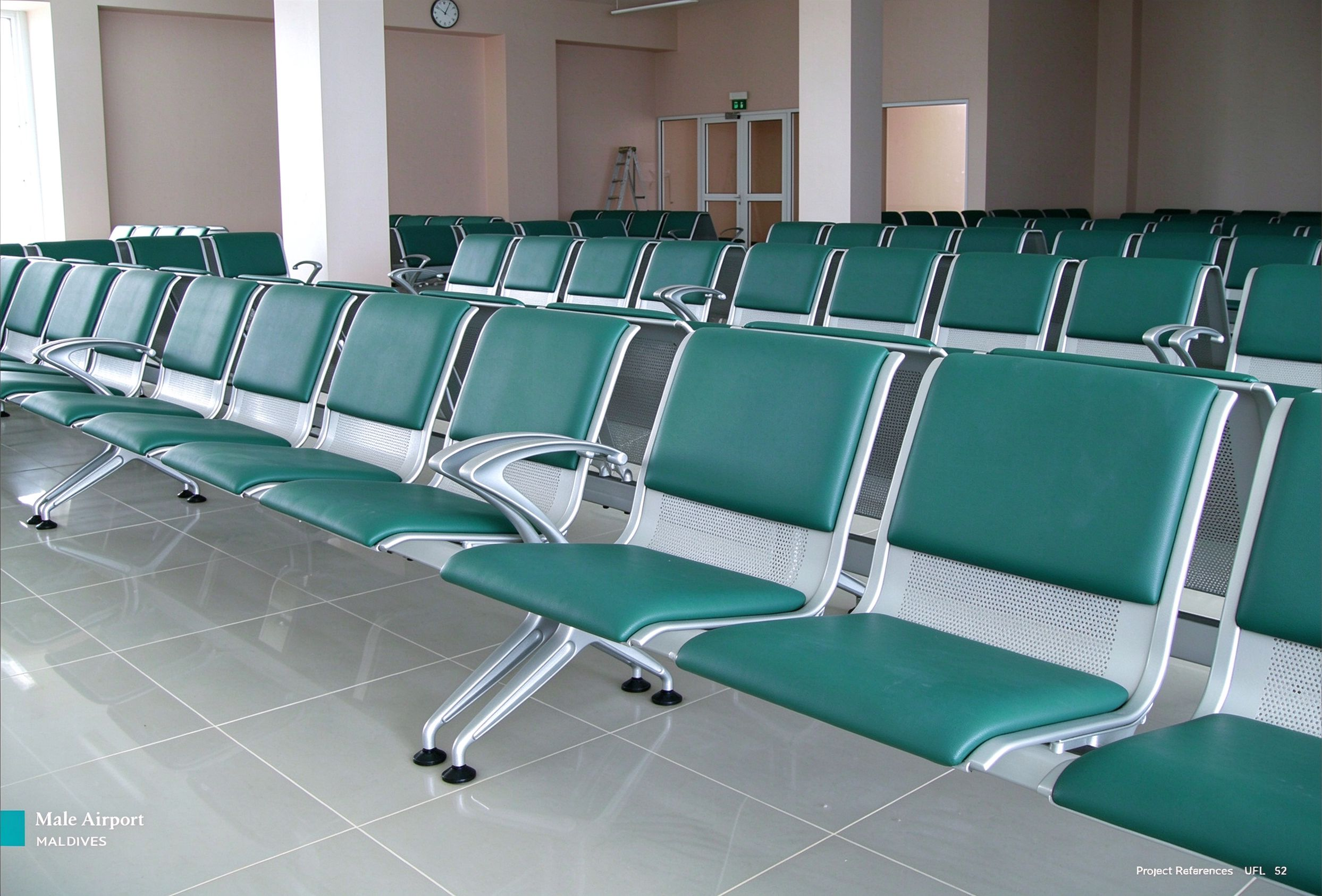
Ask what material forms each user-contact component: seat, back, arm, cushion, or other exposed surface. Depending on the model, a airport chair supplier may offer PU, leather, plywood, metal, upholstery, or another specified surface. Review the structural group separately and identify the beam, legs, brackets, supports, frame, and connection parts.
MINGLE airport waiting area seating manufacturer B445 airport waiting chair states steel, aluminum alloy, and PU as main materials, lists one- to five-seat options, and shows customizable colour and airport application. Confirm the exact model and configuration for the enquiry.
Request finish, hardware, and maintenance evidence
Ask whether colour applies to the seat, back, frame, beam, arms, or other parts, and record sample reference, approval date, drawing revision, cleaning products, replaceable components, and care guidance. Do not turn a general material name into an unsupported claim about hygiene, fire performance, impact resistance, lifespan, or maintenance cost.
- Model code and exact seat configuration.
- Seat, back, arm, beam, frame, leg, and hardware materials.
- Finish, colour, texture, gloss, and sample references.
- Configuration drawing and revision date.
- Cleaning guidance and replaceable components.
- Included items, exclusions, packaging, inspection, and installation assumptions.
Check samples and drawings together
Review a sample against the drawing. Confirm seat count, arms, end components, support positions, visible joins, edge treatment, alignment, colour, gloss, texture, and the relationship between the user-contact surface and the frame. Request plan, elevation, or section information where the beam must coordinate with walls, columns, doors, queue equipment, and circulation routes.
Compare quotations on a common material basis
Build a table with columns for model, seat configuration, quantity, seat and back surfaces, frame and beam finish, arms and end components, sample status, packaging, inspection, shipping term, unloading, installation, spare parts, documents, exclusions, and approval milestones. Issue the same response template to every bidder and ask what is excluded instead of filling gaps with assumed price, MOQ, lead time, or performance statements.
Request a beam seating material review
Ready to compare beam seating materials for an airport project? Send us the coordinated layout and procurement checklist for the intended model and configuration. Include the zone, seat schedule, finish direction, drawing revision, sample expectations, maintenance information, delivery responsibilities, and handover requirements.
🌐 https://gdmingle.com/airport-waiting-chairs/
☎️ WhatsApp/Wechat/Call: +86 133 9224 9161