
Beam seating for high-traffic terminals should be selected from the approved layout, operating needs, and exact product configuration—not from a photograph or a headline unit price. Buyers need to check seat counts, circulation, accessible interfaces, materials, cleaning guidance, drawings, samples, delivery scope, and handover documents before releasing an airport seating package. This guide gives airport operators, architects, contractors, and FF&E procurement teams a practical review sequence for busy gate areas, waiting zones, and other passenger-facing spaces.
The first design check is not the chair. It is the movement pattern around the chair. Mark the waiting zone, boarding or service direction, queue interfaces, doors, columns, equipment, cleaning routes, and the clear paths that must remain available. Then test where passengers sit, stand, turn, place a small bag, and leave the row. A beam arrangement that fits a plan dimension may still create a difficult pinch point when nearby equipment or a temporary queue is added.
Separate the seating schedule by zone instead of treating the terminal as one uniform room. A gate waiting area may need a different arrangement from an arrival hall, transfer corridor, or short-stay waiting point. Record the intended use, approximate seat arrangement, adjacent fixtures, and latest drawing revision for each zone. Keep provisional quantities clearly marked until the project team approves them.
MINGLE airport waiting chairs to review available airport chair categories, then return to the selected model page before writing a purchase requirement. The collection is a starting point, not a substitute for a coordinated terminal layout.
Verify the beam seating configuration
A quotation should identify the exact beam seating basis. Confirm the model or code, number of seats, arms, end conditions, supports, overall dimensions, fixing assumptions, finish direction, and any options shown on the approved drawing. An individual chair, a multi-seat beam unit, and a sample are different comparison bases. Ask the supplier to show alternatives on separate lines rather than blending them into one total.
MINGLE beam seating lists steel, aluminum alloy, and PU as main materials, offers one- to five-seat configurations, and describes customizable colour and airport application. The same page presents the product as an airport waiting chair with aluminum armrests and PU cushion options. These details belong to that specific page and model; buyers should ask MINGLE to confirm the exact configuration, finish, and applicable documents for the live enquiry.
Check whether the proposed arrangement matches the plan at row starts and ends. Review columns, walls, doors, equipment clearances, accessible positions, and the route used for installation. If a terminal has multiple furniture zones, keep a zone schedule that links each row to its model, seat count, drawing, and finish reference. This prevents a generic phrase such as “airport beam seating” from hiding a configuration mismatch.
Check materials and maintenance evidence
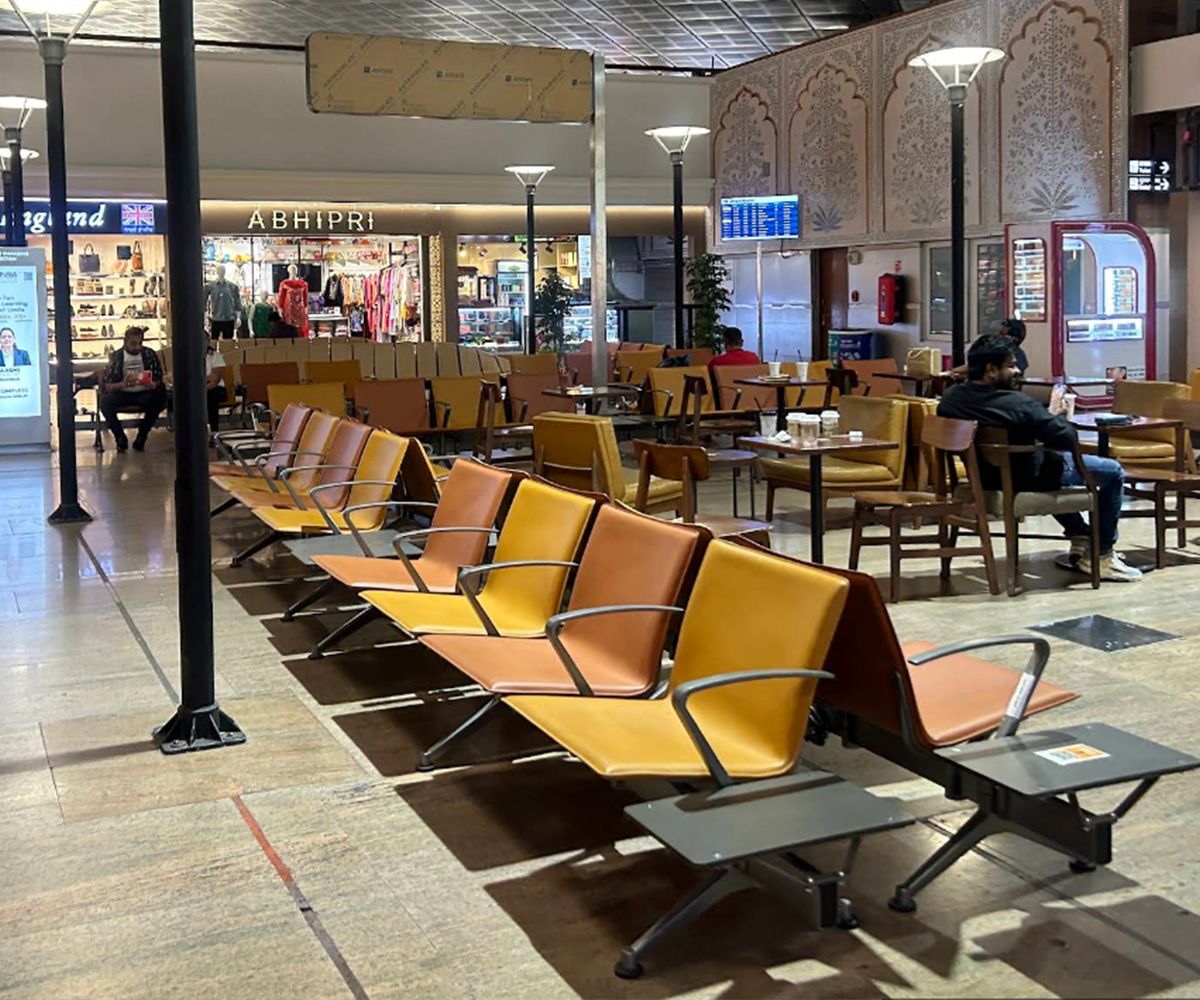 High passenger turnover makes maintenance planning part of procurement. Ask for a model-specific description of exposed materials and finishes, together with care instructions for the selected configuration. Record which information is confirmed by the supplier and which items still require approval. Do not describe a surface as maintenance-free, stain-proof, antimicrobial, or compatible with a particular chemical unless evidence covers the exact model and finish.
The useful questions are practical: Which cleaning products are permitted? Which products should be avoided? How should spills or visible damage be reported? Which components are intended to be replaceable? How are replacement parts matched to the installed model, seat count, finish, and drawing revision? If the operator already has a cleaning regime, compare it with the supplier’s written guidance before handover rather than assuming that a general terminal procedure is suitable for every surface.
Create an inspection record for each zone. It can include the date, reviewer, model reference, visible condition, loose or missing components, damaged finishes, support or foot condition, action owner, and close-out status. The project team should set inspection intervals according to its own operating procedures and access conditions. A supplier webpage cannot establish a universal maintenance interval or service-life promise.
Coordinate installation with live operations
In a high-traffic terminal, delivery and installation affect more than the furniture room. Before ordering, define the expected packaging, unloading, storage, protection, site access, security process, work permits, installation responsibility, waste handling, snagging, and handover scope. Ask every bidder to state inclusions, exclusions, assumptions, and open questions in the same format.
For a phased renovation or a new terminal fit-out, link each delivery batch to the zone that is ready to receive it. Confirm who checks package condition, who protects completed work, who records missing components, and who approves a change if the site condition differs from the drawing. Do not place an unverified delivery date, installation duration, or access window into the programme. Those items depend on the actual quantity, destination, approvals, site readiness, and project logistics.
The layout review should continue during installation. Check the row position, end conditions, seat count, nearby routes, accessible interfaces, and protection of adjacent finishes against the controlled drawing. If a unit is moved after approval, record the reason and obtain the project’s required review when the change affects passenger flow, access, queue conditions, or equipment clearance.
Approve drawings, samples, and handover records
A clear approval trail helps the purchasing team compare what was offered with what is installed. Ask the supplier for the configuration or dimensional drawing, model reference, finish or colour information, sample basis where required, packing information, installation notes, care guidance, and replaceable-part references that apply to the exact arrangement. Mark each document with its revision and approval status. Superseded drawings should be clearly separated from the current basis.
Use a short review checklist before production release:
- Does the drawing show the approved seat count, arms, ends, supports, and overall dimensions?
- Does the finish reference match the approved sample or written direction?
- Are zone, quantity, packaging, delivery, inspection, and installation responsibilities clear?
- Are accessible positions and circulation interfaces coordinated with the latest plan?
- Are care instructions and part-identification information included for handover?
- Are exclusions, deviations, and open questions recorded instead of assumed away?
At receiving and handover, reconcile the package labels, visible condition, quantity, configuration, and finish with the approved schedule. Record defects, missing items, accepted deviations, owners, and due dates. Keep the final drawing, zone schedule, finish record, care guidance, installation notes, inspection record, and open-item list together so facilities and procurement teams can use the same evidence later.
Request a high-traffic terminal seating review
If you are planning beam seating for high-traffic terminals, prepare one controlled enquiry package before requesting a quotation. Include the latest layout, zone-by-zone seat schedule, movement and access constraints, model direction, finish expectations, sample needs, delivery assumptions, installation boundary, maintenance-document requirements, and the person responsible for approval. Then ask MINGLE for a model-specific configuration and a written response to the open items.
Add a short decision record to the package. Note which layout revision was reviewed, which configuration is provisional, which finish or sample still needs approval, and which site conditions could change the scope. List the person responsible for technical review, purchasing, operations, and receiving so questions do not disappear between teams. If the terminal is being renovated in phases, identify the first zone, protection requirements, and the information needed before the next release. Ask for every assumption and exclusion to be written beside the relevant line rather than buried in a general note.
This process gives design, procurement, operations, and installation teams a shared basis without inventing a project result, price, certification, delivery promise, or universal performance claim.
💻https://gdmingle.com/airport-waiting-chairs/
📧 Email: sales02@gdmingle.com
📞 WhatsApp: +86 133 9224 9161