
A modern control room console is more than a space filled with screens and computers. It is the operational hub where teams monitor information, communicate with one another, coordinate responses, and make time-sensitive decisions. For this reason, choosing the right control room furniture is essential to creating a productive, comfortable, and reliable working environment.
Well-designed control rooms support people as much as technology. Layout, viewing angles, cable management, storage, and operator comfort all influence efficiency. From transportation and security facilities to energy, utilities, manufacturing, and emergency response centers, professional control room furniture helps organizations prepare for continuous operation.
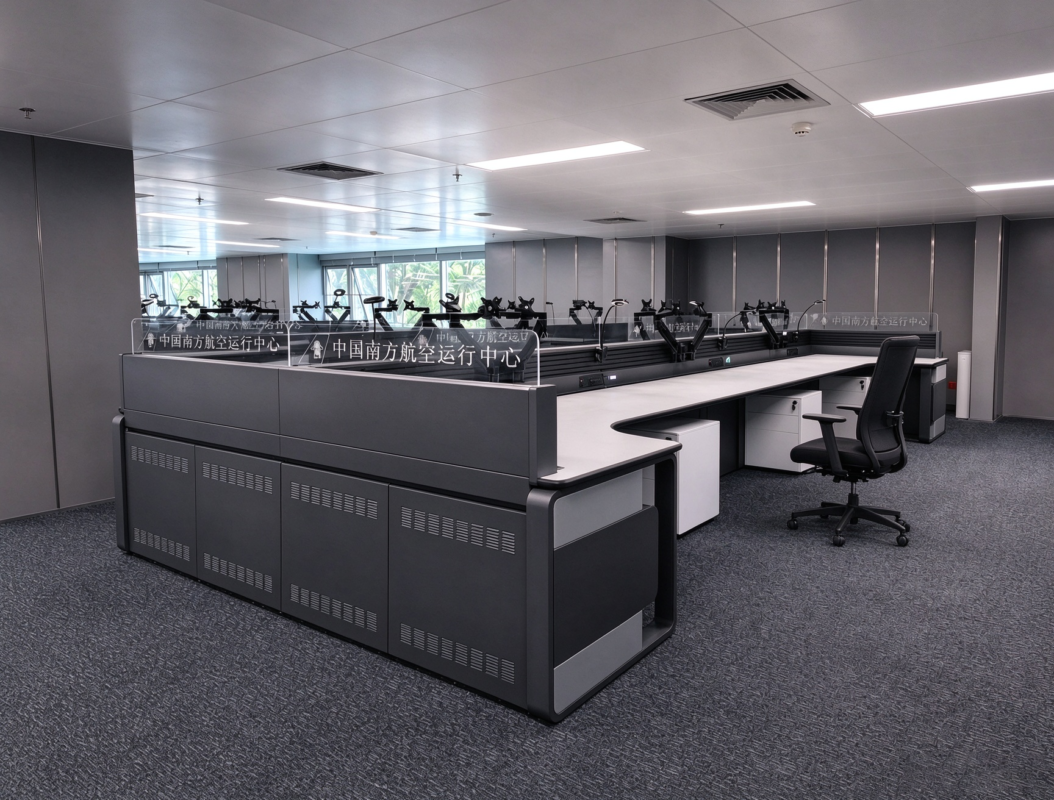
What is Control Room Console Furniture?
MINGLE Control Room Console Furniture includes the specialized desks, consoles, workstations, operator chairs, storage units, monitor supports, and integrated accessories used in professional monitoring environments. Unlike ordinary office furniture, these solutions are designed around operational visibility, equipment integration, long working hours, and coordinated teamwork.
A typical system may include individual operator positions, workstation rows, raised monitor platforms, equipment cabinets, communication areas, and customized cable-routing systems. Every element should keep the environment organized and accessible.
The goal is to create a clear operating structure in which each operator can see required information, reach essential equipment, communicate efficiently, and remain comfortable throughout the day.
The Role of Control Room Consoles
Control room consoles are the central working platforms in many operations centers. They provide dedicated positions for computers, communication devices, monitors, control panels, and other equipment. Depending on the application, consoles may be arranged in straight rows, curved formations, U-shaped layouts, or customized multi-level configurations.
A well-planned console layout improves sightlines and helps operators maintain awareness of shared information. It also creates a more direct communication path between team members, reducing unnecessary movement and visual obstruction.
Professional control room consoles should allow for future changes. Equipment may need to be upgraded, repositioned, or replaced. Modular construction and accessible cable management make it easier to adapt the workspace without rebuilding the room.
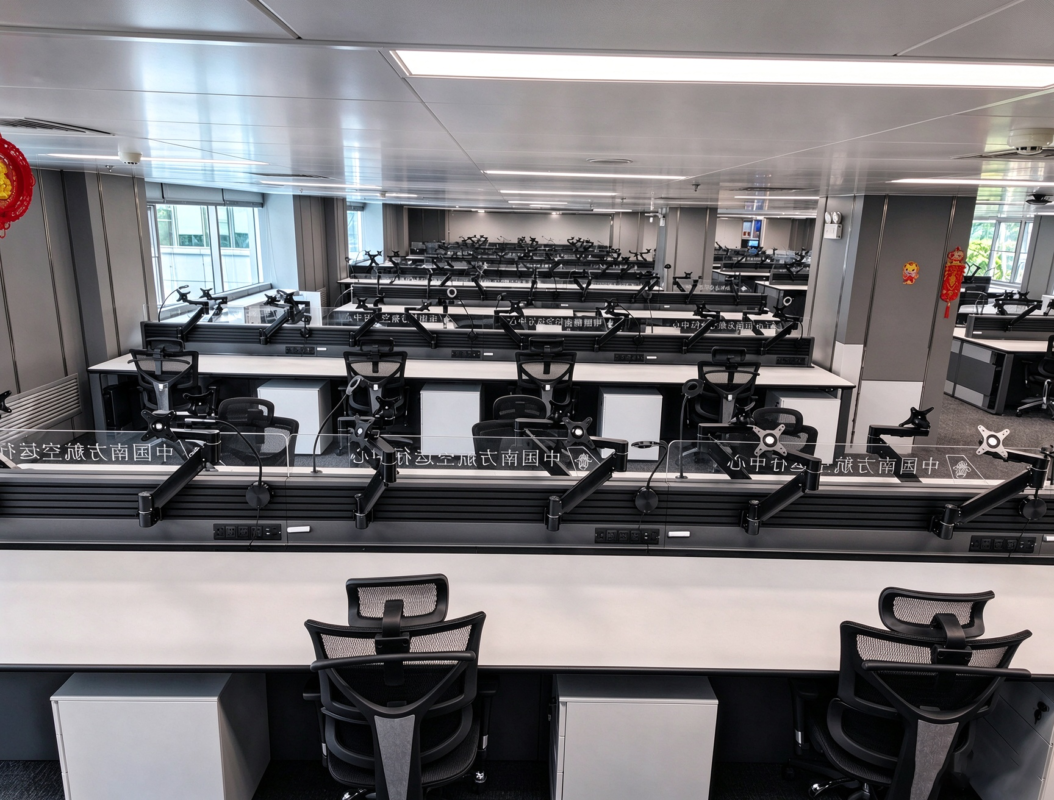
Choosing the Right Control Room Desk
MINGLE Control Room Desk must be designed for operational use rather than occasional office work. Operators may spend many hours at their stations, so the desk should provide sufficient working space, appropriate monitor positioning, comfortable legroom, and practical access to equipment.
The working surface should support required equipment while maintaining a clean appearance. Built-in cable routing reduces loose wires and simplifies maintenance. Monitor supports and raised platforms create a clear visual field while keeping space available for keyboards, communication devices, and documents.
Ergonomics is equally important. A suitable Control Room Desk should support a natural posture and reduce unnecessary reaching or twisting, helping operators work more efficiently during extended shifts.
Command Center and Control Center Table Design
A Command Center may operate continuously and involve multiple teams. Its furniture should support both individual concentration and group coordination. The layout needs to reflect how information moves through the organization and how decisions are made during normal and critical situations.
A Control Center Table can serve as an operator position, collaboration area, or part of an integrated console system. Its shape and placement should match the room size, number of users, screen arrangement, and communication paths.
Smaller facilities may benefit from compact linear arrangements, while larger operations centers may use curved or angled configurations for better visibility. The most effective layout reflects actual workflow rather than applying a standard design without considering operational needs.
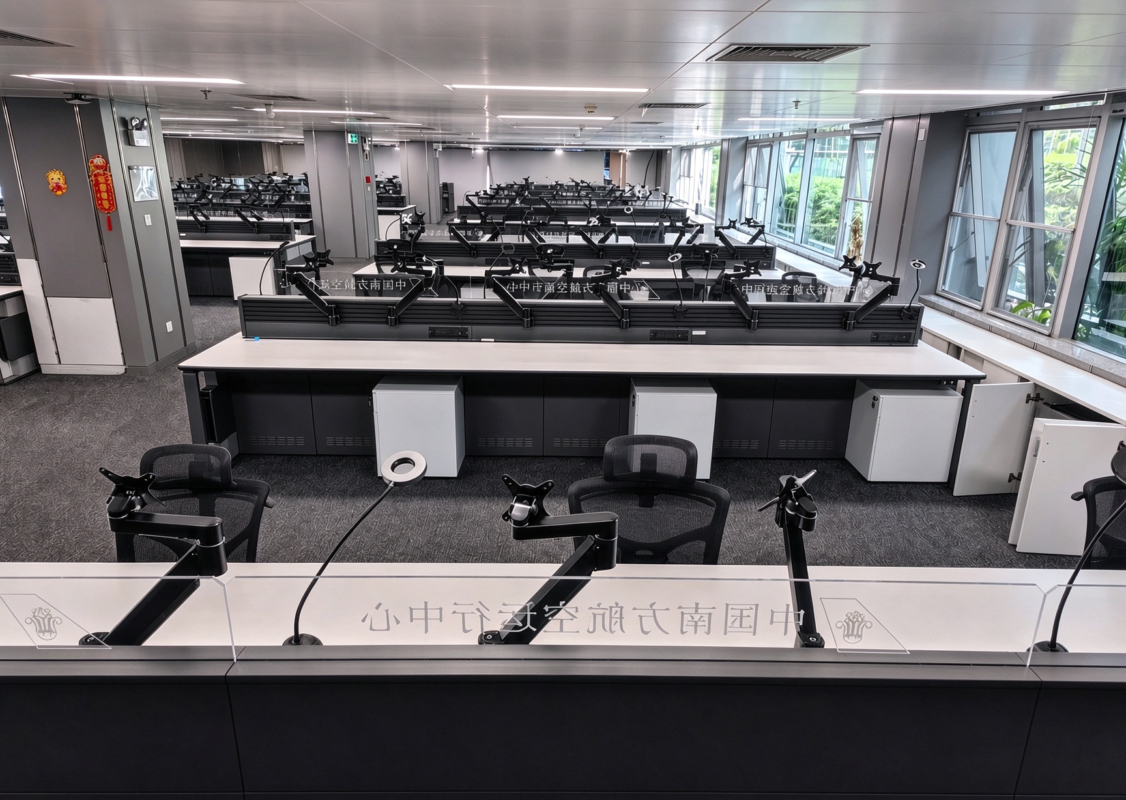
Command Center Console Solutions for Professional Environments
Command Center Console systems are commonly used in facilities where teams must monitor multiple information sources and coordinate actions. These environments may include transport control rooms, network operation centers, public safety facilities, security monitoring rooms, utilities, and industrial operations.
Effective Console Solutions should combine functionality, durability, serviceability, and visual consistency. Furniture must withstand demanding daily use while keeping technology organized and accessible. Easy-to-maintain surfaces and a professional appearance are also important.
A Command Center Desk can be configured with modules such as monitor supports, equipment compartments, integrated power access, cable management, side storage, and customized dimensions. These features adapt the furniture to the room instead of forcing the room to follow a fixed product format.
Why Layout and Visibility Matter
In an operations environment, visibility is directly connected to awareness. Operators need to see their own displays while maintaining access to shared screens, team members, and important room information. Poorly planned furniture can create blocked sightlines, crowded walkways, and unnecessary distractions.
A carefully arranged control room creates a clearer visual hierarchy. Main displays remain visible from multiple positions, while individual workstations provide focused access to role-specific information. Adequate spacing supports movement, maintenance, and emergency access.
The best design balances density and openness. Too much empty space may reduce efficiency, while excessive density can make the room uncomfortable and difficult to maintain. Professional planning balances equipment capacity, operator comfort, and long-term flexibility.
Control Room Furniture for Long-Term Value
Investing in specialized control room furniture is a long-term decision. A standard office desk may not provide the durability, cable management, monitor integration, or ergonomic support required for continuous operations.
Purpose-built furniture can reduce clutter, simplify maintenance, and create a consistent environment for operators. Modular systems may also reduce future upgrade costs because components can be adjusted or replaced as requirements change.
The right control room furniture solution should be selected after reviewing room dimensions, operator numbers, equipment requirements, screen positions, working schedules, access routes, and future expansion plans.
Building a Better Operations Environment
A successful control room console combines technology, people, and space into one coordinated system. Control room consoles, a suitable Control Room Desk, and a practical Command Center Console layout can contribute to clearer communication and more efficient operations.
At GDMINGLE, we understand that every project has different requirements. Transportation control rooms, security centers, industrial monitoring facilities, and emergency response centers may all need different configurations. Professional Console Solutions should therefore be developed around the actual workflow, equipment, and available space.
From planning and layout design to manufacturing and installation, every detail contributes to the completed environment. If you are planning a new Command Center or upgrading an existing Control Center Table and workstation layout, choosing the right furniture partner is an important step.
Control Room Console Solutions: https://gdmingle.com/product-category/control-room-console/
Contact us to discuss your project requirements, room layout, equipment integration, and customized control room furniture needs.
WhatsApp/Wechat: +86 133 9224 9161