
When a terminal project is selecting airport luggage trolleys for arrivals, the first decision is not simply how many carts to buy. Buyers should map the baggage-claim exit, trolley collection points, passenger walking routes, and return path, then match the trolley configuration to those operating conditions. A procurement brief should identify the intended arrival zone, cart type, braking or nesting requirements, finish, delivery scope, and acceptance documents. This approach helps the airport team compare suppliers on usable information rather than on a product photograph alone.
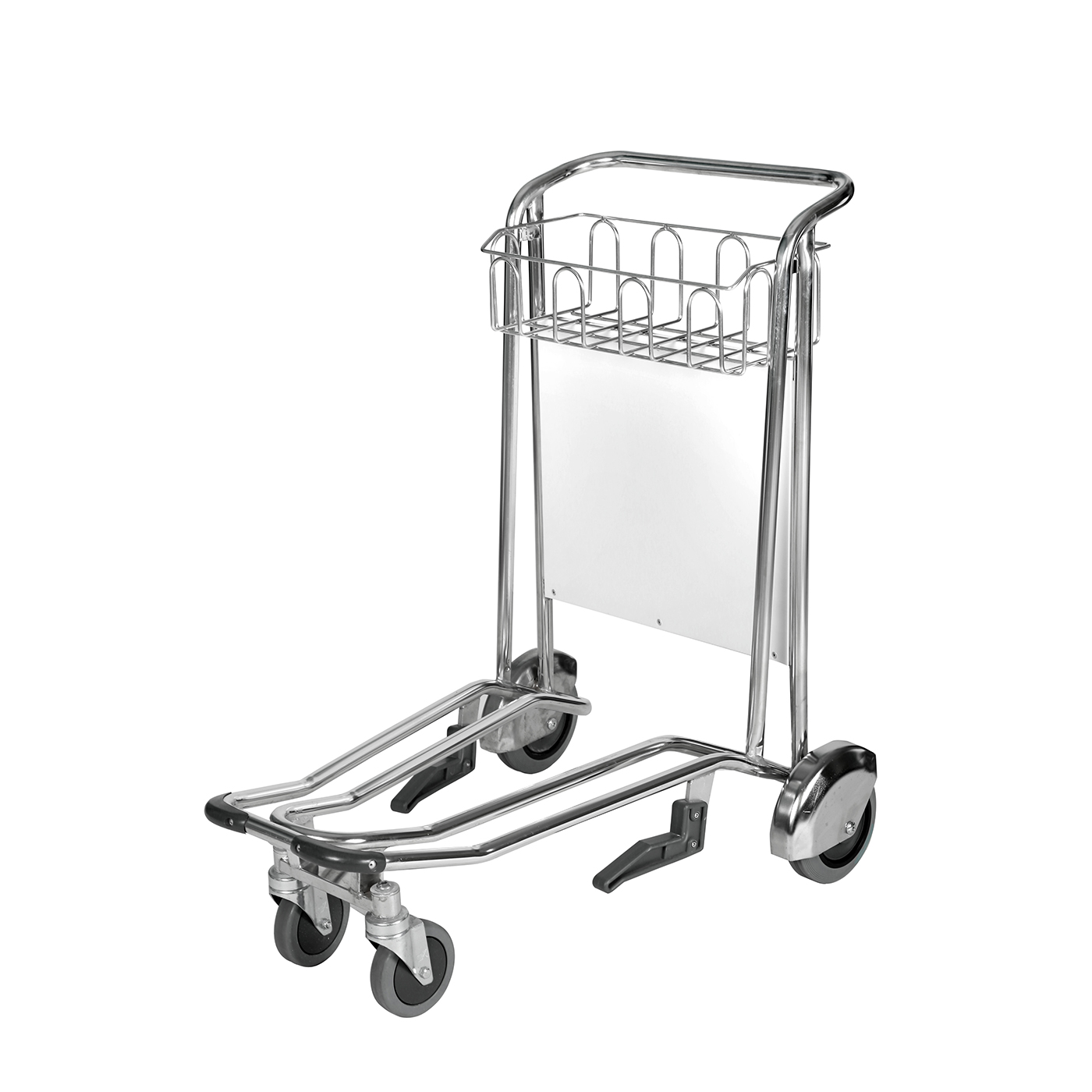
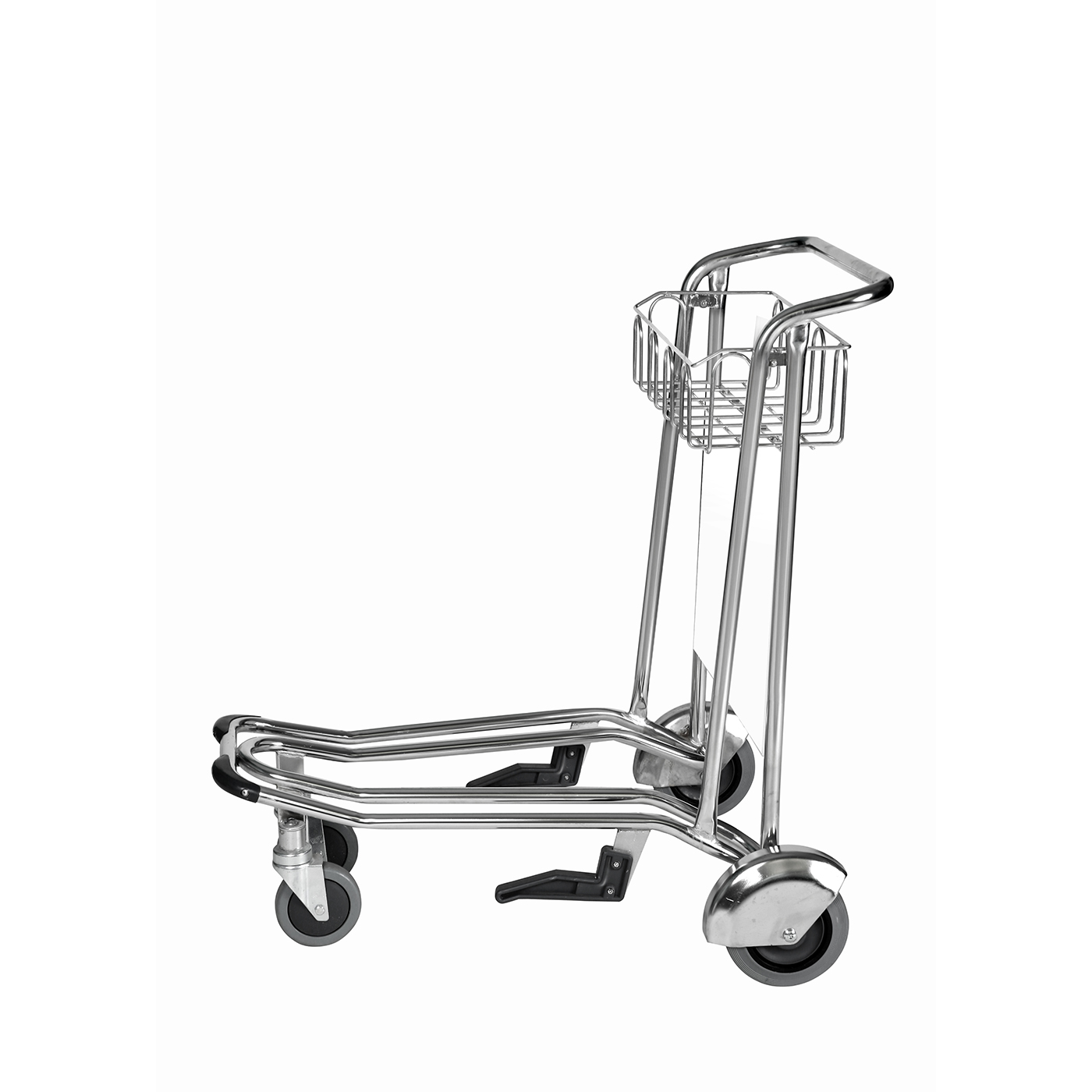
This guide explains a practical arrival-hall review. MINGLE’s airport trolley category presents BG Series, LG Series, and Shopper options. The CY-X4150-BW2 airport trolley page, for example, lists a self-adjusting automatic brake with pole, an ergonomic flat handle, a stainless steel basket, natural rubber anti-noise wheels, and a nesting system. Treat those as page-specific product facts and confirm the selected model’s current documents before approval.
Map the Arrival Journey Before Comparing Carts
Start with the passenger journey from baggage claim to the public transport, parking, taxi, or pickup area. Mark where passengers first need a trolley, where carts can be collected without narrowing circulation, and where empty carts can be returned. Include doors, columns, escalators, elevators, kerbs, payment or information points, and any security-controlled boundary that affects movement.
A useful layout review records the distance between the collection point and baggage-claim exits, the clear width of the proposed trolley lane, and the turning space at corners. Do not convert a drawing into a capacity promise without checking the actual site and operating plan. Instead, use the plan to define what the supplier must review: trolley dimensions, nesting length, handle clearance, wheel behavior, brake operation, and storage footprint.
Ask the project team to mark three zones:
- Collection zone: where a passenger can take a trolley without blocking the main flow.
- Use zone: the route from baggage claim to the building exit or transfer point.
- Return and storage zone: where staff can gather, sort, and reposition empty trolleys.
This map makes supplier quotations easier to compare because every bidder responds to the same arrival conditions.
Check the Trolley Configuration Against the Use Case
Airport luggage trolleys for arrivals may be evaluated by handle position, basket or platform arrangement, wheel set, braking method, nesting behavior, and accessories. The correct combination depends on the project brief. A trolley intended for passengers with several bags should be reviewed differently from a compact shopper format or a staff transport cart.
For a shortlisted model, request a current drawing and a written option list. Confirm which details belong to the base product and which require a selected configuration. MINGLE’s CY-X4150-BW2 page states that the model has an aluminum-alloy construction and a listed load capacity of up to 150 kilograms. That claim should remain associated with that specific page and model; it should not be copied to another trolley without evidence.
Review the following items in a structured table or checklist:
- Handle and passenger contact points: Check grip shape, clearance, and whether the proposed height suits the intended users.
- Basket or platform: Confirm how luggage is supported and whether the visible arrangement matches the drawing.
- Wheels: Ask about wheel material, swivel behavior, noise considerations, and replacement identification.
- Brake or control feature: Confirm where the brake operates, how it is demonstrated, and what staff need to inspect.
- Nesting: Record the nested length and the method staff use to separate or collect carts.
- Protection details: Identify bumper or edge features shown in the selected product documentation.
Avoid treating a generic label such as “heavy-duty trolley” as a specification. The project record should identify the exact model, options, drawing revision, and open questions.
Plan Collection, Return, and Staff Handling
Arrival operations depend on more than passenger use. Staff need a repeatable way to collect loose carts, move nested groups, inspect damaged units, and return carts to the correct point. Define who performs each task and where it happens. If the selected product documentation mentions an engagement system for moving more than 40 trolleys with an airport scooter, ask the supplier to explain the applicable configuration and operating boundary. Do not assume that a listed feature automatically applies to every trolley in the category.
The procurement brief should request:
- A proposed collection and return layout based on the supplied plan.
- A description of how nested carts are separated safely.
- Identification of routine inspection points for wheels, brakes, handles, bumpers, and baskets.
- A replacement-parts list for the approved configuration.
- Cleaning and storage guidance suitable for the selected finish.
- Any staff training or handover notes included in the delivery scope.
These questions create a usable handover record without inventing staffing numbers, operating volumes, or maintenance intervals.
Compare Supplier Submissions on Evidence
When comparing airport luggage trolley quotations, place the commercial offer beside the technical submission. Check that each supplier identifies the product model, dimensions, materials, options, image references, packing approach, delivery scope, and inspection documents. If a quotation gives a price but no configuration drawing, mark that item as open rather than assuming the missing information.
Use a simple comparison sheet with columns for requirement, supplier response, evidence document, clarification needed, and approval status. Record whether a statement is a product-page fact, a drawing note, a supplier reply, or a project requirement. This prevents broad claims about durability, certification, capacity, or delivery from entering the final specification without support.
For the arrival area, give special attention to the interfaces that can create rework: door clearances, elevator dimensions, floor transitions, storage barriers, signage, and the route from baggage claim to the public exit. Ask the supplier to comment on the actual drawing where coordination is important.
Request an Arrival-Hall Trolley Review
If you are procuring airport luggage trolleys for a new terminal, renovation, or arrival-area upgrade, send MINGLE the relevant layout, collection and return points, preferred trolley direction, finish requirements, and review questions. Start with the MINGLE airport trolley category and identify the model or series that should be evaluated. Request current drawings, configuration details, maintenance information, and handover documents for the exact selection. This gives your team a clear basis for comparing submissions and approving a trolley arrangement without presenting an unverified product claim as a project fact.
Before sending the inquiry, attach the arrival plan and mark the collection, use, and return zones. List the trolley model or series under review, the questions that remain open, and the documents needed for approval. Ask us to respond against the same brief so your team can compare technical evidence consistently. A focused request also helps separate confirmed product information from site-specific decisions that must be coordinated with the terminal operator, designer, contractor, and facilities team.