
Airport seating maintenance planning should begin before airport chairs are installed. Buyers and operators need a clear record of the model, configuration, materials, finish, cleaning guidance, replaceable parts, inspection points, and supplier responsibilities. A practical maintenance plan connects the approved drawing to the furniture actually delivered, so facilities teams do not have to guess which surface, component, or care method applies. Start with the exact chair configuration, then build a handover file that can support routine cleaning, defect reporting, repair decisions, and future replacement.
This guide is for airport operators, facilities teams, architects, contractors, and FF&E procurement professionals. It does not promise a universal service life or maintenance result. Cleaning products, inspection intervals, access procedures, and repair decisions must be confirmed for the destination, operator, exact materials, and project requirements.
Build the maintenance brief around the exact airport chair
A maintenance plan is only useful when it identifies what was supplied. Record the product model or code, number of seats per unit, arms, end components, beam or frame arrangement, finish, drawing revision, and installation zone. Add the supplier’s material description and the care guidance that applies to the offered configuration. Do not copy a generic instruction from a different chair simply because the products look similar.
The maintenance brief should also identify who owns routine cleaning, who reports damage, who approves replacement parts, and who closes defects. If the project is phased, create a separate line for every zone and drawing revision. This makes later repairs traceable when old and new seating appear in the same terminal.
Record materials, finishes, and care instructions
Ask the airport chair supplier to identify the materials used for the seat, back, arms, beam, frame, legs, brackets, and other exposed parts where applicable. Record the finish or colour reference for each relevant component and note whether a sample was approved. The purpose is not to collect broad material labels; it is to understand which surfaces facilities staff must clean and which parts may need inspection or replacement.
MINGLE states steel, aluminum alloy, PU airport waiting chairs as main materials, lists one- to five-seat options, and shows customizable colour and airport application.
Request written guidance covering permitted cleaning methods, products to avoid, drying or wiping instructions, visible damage reporting, and storage or handling of spare parts. Do not describe a surface as stain-proof, maintenance-free, hygienic, or compatible with a particular chemical unless the supplier has supplied evidence for the exact model and finish. If the operator uses a standard cleaning regime, compare it with the model-specific guidance before handover.
 Create inspection points for routine maintenance
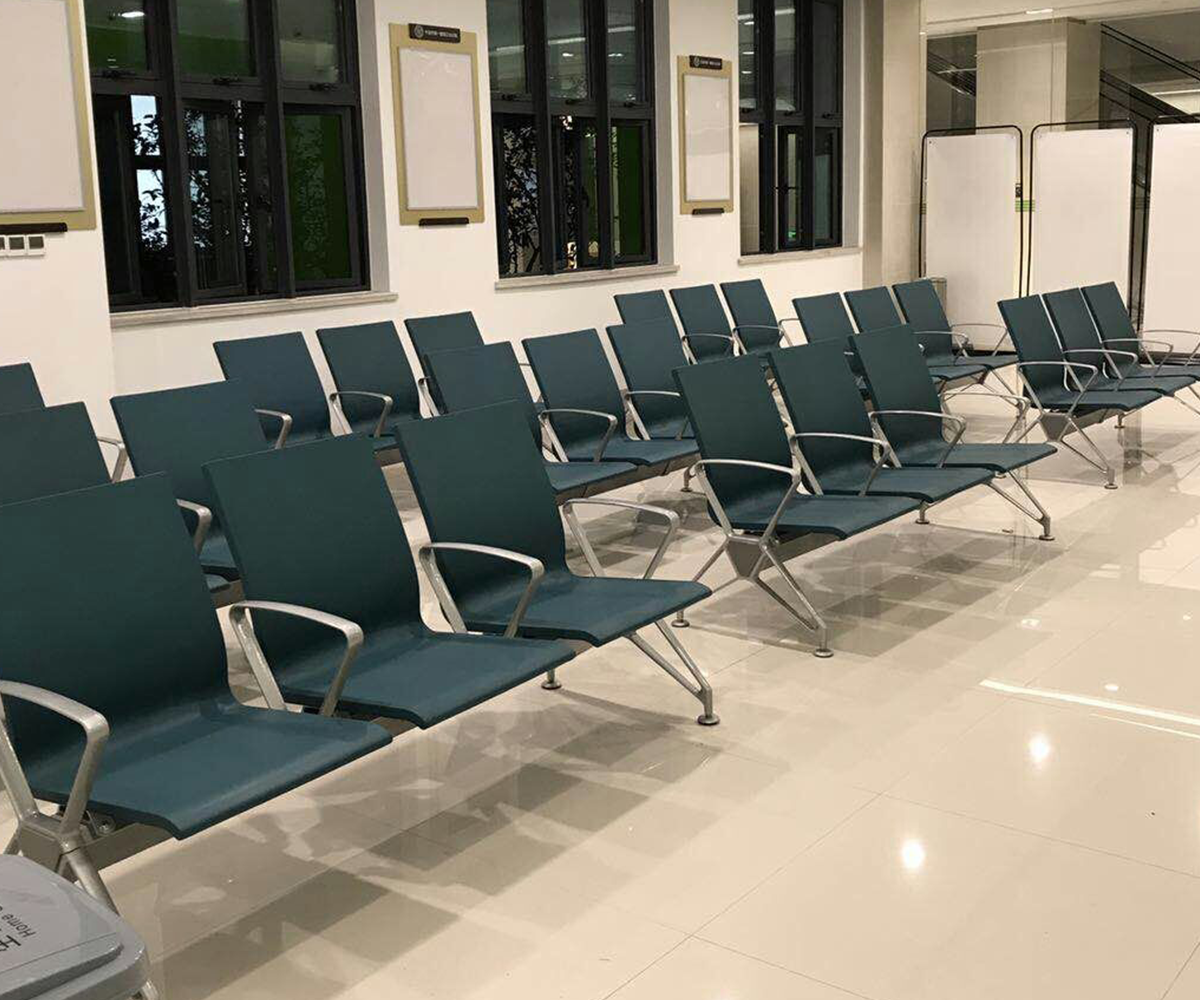 Create inspection points for routine maintenance
A useful inspection checklist turns a visual review into a repeatable record. Ask the facilities team to define the frequency and responsibility for each check based on the terminal’s operating conditions. Possible inspection points include visible seat or back damage, loose or missing components, damaged finishes, sharp or exposed edges, movement at supports, unstable feet or glides, damaged armrests, and obstruction around the seating zone. The project team should confirm which checks are appropriate for its equipment and procedures.
Inspect the furniture together with its surroundings. Check whether the row remains in its approved position, whether nearby fixtures restrict access, whether cleaning staff can reach under-seat areas, and whether luggage or temporary equipment has changed the intended clearance. Record the zone, date, inspector, observed condition, action required, and close-out status. A photograph can support the record, but it should not replace the model and drawing reference.
When a defect is found, classify it as cleaning, adjustment, replacement-part, finish, structural, installation, or site-condition related only when the responsible team has enough evidence to do so. If the cause is uncertain, mark it open and request technical review rather than guessing.
Plan replaceable parts and supplier questions
Buyers should ask about replaceable parts before the purchase order is closed. Request part names or reference codes for arms, glides, caps, connectors, cushions, seat or back elements, brackets, and other components that the supplier identifies as serviceable. Ask how the facility team can match a replacement to the installed model, seat count, finish, and drawing revision. Do not assume that a visually similar part is interchangeable.
Include these questions in the procurement or handover checklist:
- Which components are intended to be replaceable?
- How are parts identified and ordered for the exact model?
- Which finishes or colours must be recorded for replacement matching?
- What care guidance applies to each user-contact surface?
- Which damage should stop use or require technical review?
- Which installation or adjustment assumptions should facilities staff know?
- What documents, drawings, samples, or inspection records are included?
Ask the supplier to separate confirmed information from recommendations. If a part reference, cleaning method, or repair boundary is not available, record it as an open handover item. Do not fill the gap with an assumed price, MOQ, lead time, certification, or performance claim.
Align cleaning, repairs, and access with operations
Airport public seating maintenance is affected by passenger movement and terminal access. Coordinate the cleaning route, equipment storage, work permits, security procedures, temporary protection, and return-to-service checks with the operator. Do not promise that a chair can be repaired in a particular time window until the terminal team confirms access and operational conditions.
For a phased replacement or renovation, identify which seats remain in service, which units are isolated, and who protects completed zones. Link every repair or replacement record to the installed model and location. If a unit is moved, record the new position and obtain the project’s required approval when the move affects routes, accessible interfaces, queue conditions, or nearby equipment.
The supplier’s installation instructions can support the handover, but they do not replace the operator’s own cleaning, safety, access, or inspection procedures. Keep those responsibilities separate in the maintenance plan so each party knows what it must confirm.
Close the handover file with usable records
Before handover, reconcile the final installed configuration with the approved drawing, finish sample, product documentation, and zone schedule. Record visible defects, accepted deviations, missing parts, outstanding documents, and owners with due dates. At completion, retain the final drawing, model and configuration reference, material and finish record, care instructions, spare-part information, installation notes, inspection record, and close-out list.
Store the information in a format that facilities staff can find during a routine inspection. A long quotation folder is not enough if it does not clearly identify the installed chair and the correct care guidance. Use a zone-based index or asset register where appropriate, and keep old revisions marked as superseded so they are not mistaken for the current basis.
Request an airport beam seating maintenance package
Planning maintenance for airport waiting chairs or public seating? Send us the installed or proposed model reference, configuration, finish, zone schedule, drawing revision, and document list. Request written care guidance, replaceable-part references, installation information, and any inspection or handover records that apply to the exact arrangement.
Before closing the project file, identify the facilities owner, cleaning reviewer, spare-parts contact, and person responsible for accepting handover documents. Ask the supplier to identify assumptions, exclusions, superseded drawings, and open questions. If the terminal is phased, list each zone and the current installed configuration so a later repair request does not rely on a generic product name. Keep the final drawing, finish reference, care instructions, inspection record, and part references in one indexed file.
Give the operator a clear record that links the product to its location and care method. This helps facilities, procurement, contractors, and future replacement teams work from the same evidence without promising an unverified lifespan or maintenance outcome.