
Airport seating specifications should be requested as a coordinated evidence package, not as a single product photograph or a short list of preferred finishes. For an airport developer, architect, contractor, or FF&E buyer, the practical approach is to ask each supplier for the same drawings, material information, configuration details, maintenance guidance, and approval documents. This makes quotations comparable and gives the project team a clearer record for sample approval, production release, receiving, and handover.
This guide focuses on what to request before selecting airport seating. It does not replace the project’s design, accessibility, fire, safety, or local code review. Those requirements must be confirmed by the responsible professionals and authorities for the actual terminal.
Begin with a complete airport seating specification brief
A useful brief tells the supplier what must be reviewed and what is still provisional. Start with the terminal zone, seating purpose, approximate locations, drawing revision, expected arrangement, finish direction, destination, and the team responsible for approval. Identify whether the requirement concerns gate seating, a general waiting area, a lounge, a transfer zone, or another public-space application. Different zones may require different layouts even when the product family looks similar.
Include a marked-up plan or schedule where available. Show columns, walls, doors, queue equipment, circulation routes, cleaning access, and any reserved mobility spaces that the design team has identified. A preliminary seat count should be labelled as preliminary. It should not be treated as a final production quantity until the drawing and configuration have been approved.
Ask the waiting chairs factory to return its offer against the same line numbers. The response should separate complete beam units, individual seats, arms, legs, end components, connectors, accessories, spare parts, packaging, inspection, and installation responsibilities. If an alternative arrangement is proposed, require it to be listed as an alternative rather than silently substituted for the requested basis.
MINGLE airport waiting chairs is a useful starting point for identifying relevant seating categories. The collection shows several airport chair groupings, so buyers should move from the category page to the exact model and configuration before treating any feature as included in a quotation.
 Request model-level materials and construction information
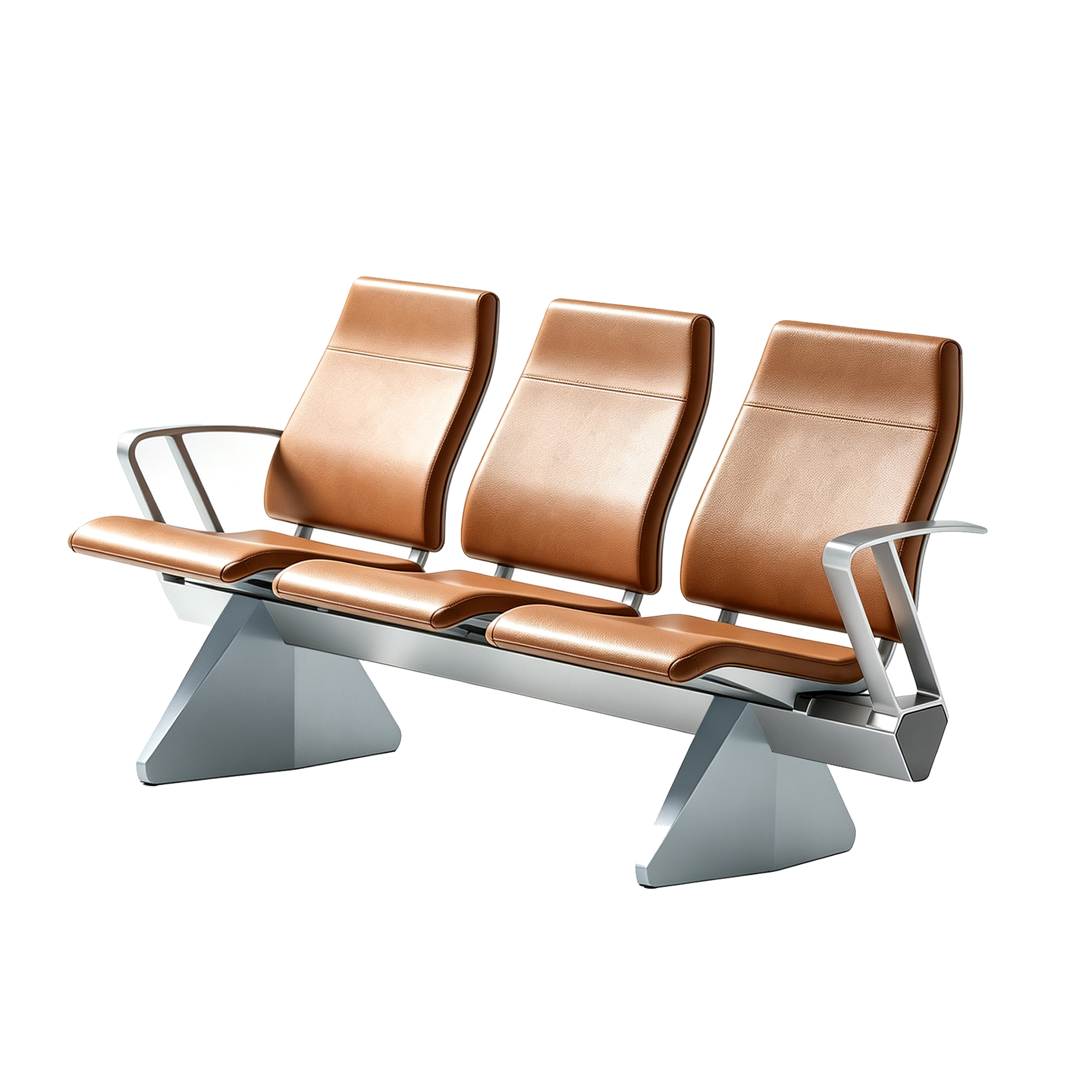 Request model-level materials and construction information
The phrase “airport chair” is not a sufficient specification. For every proposed model, request the product name, dimensional drawing, seat count options, overall dimensions, connection details, finish schedule, material description, and any available care instructions. Ask the supplier to identify which information applies to the exact configuration being offered. A statement for a product family should not automatically be transferred to every size, seat count, finish, or accessory.
MINGLE airport chair suppliers displays customized color options, one- to five-seat configurations, airport application, a minimum order quantity of 50 sets, and a statement referring to ISO/ANSI/BIFMA X5.4 certification. These are claims displayed on that specific page. A project team should still ask for the applicable document, confirm its scope, and check the exact configuration before using the information in an approval record.
Use a model review sheet with fields such as:
- Model and configuration reference.
- Number of seats, arms, backs, legs, and end components.
- Overall dimensions and any drawing tolerances supplied.
- Seat, back, beam, frame, armrest, and finish descriptions.
- Color or finish sample reference.
- Connection, fixing, and end-condition assumptions.
- Replaceable components and spare-part identification.
- Cleaning and routine-care instructions.
- Applicable test, standard, or certification documents.
- Explicit exclusions from the quotation.
Do not infer performance from a photograph. If the project requires a specific fire, safety, durability, accessibility, or cleaning performance, write that requirement into the tender and ask the responsible supplier and design professionals to provide the appropriate evidence.
Ask for drawings that support coordination
Product information becomes more useful when it can be coordinated with the terminal design. Request plan, elevation, and section information for the proposed airport seating arrangement where needed. The drawing package should make the seat count, arms, end panels, beam direction, fixing assumptions, and clearances understandable to the reviewers.
Ask the supplier to identify information that must be confirmed by others. Examples include floor conditions, fixing substrates, nearby columns, wall tolerances, access routes, power or data equipment, cleaning routes, and the relationship to queue barriers. A supplier can provide a product drawing, but the project team must coordinate it with the actual building and operational plan.
For a multi-seat beam arrangement, ask for a configuration drawing rather than relying on a catalogue image. The drawing should show where the unit starts and ends, how changes in direction are handled, and whether arms or end components differ between positions. If a wheelchair or companion space is part of the project plan, have the responsible design team confirm the arrangement and circulation instead of asking the product page to answer a site-specific accessibility question.
Before approval, use a drawing register. Record the file name, revision, date, reviewer, comments, response, and approval status. This prevents an old image or superseded configuration from being used for production.
Specify finish, sample, and maintenance evidence
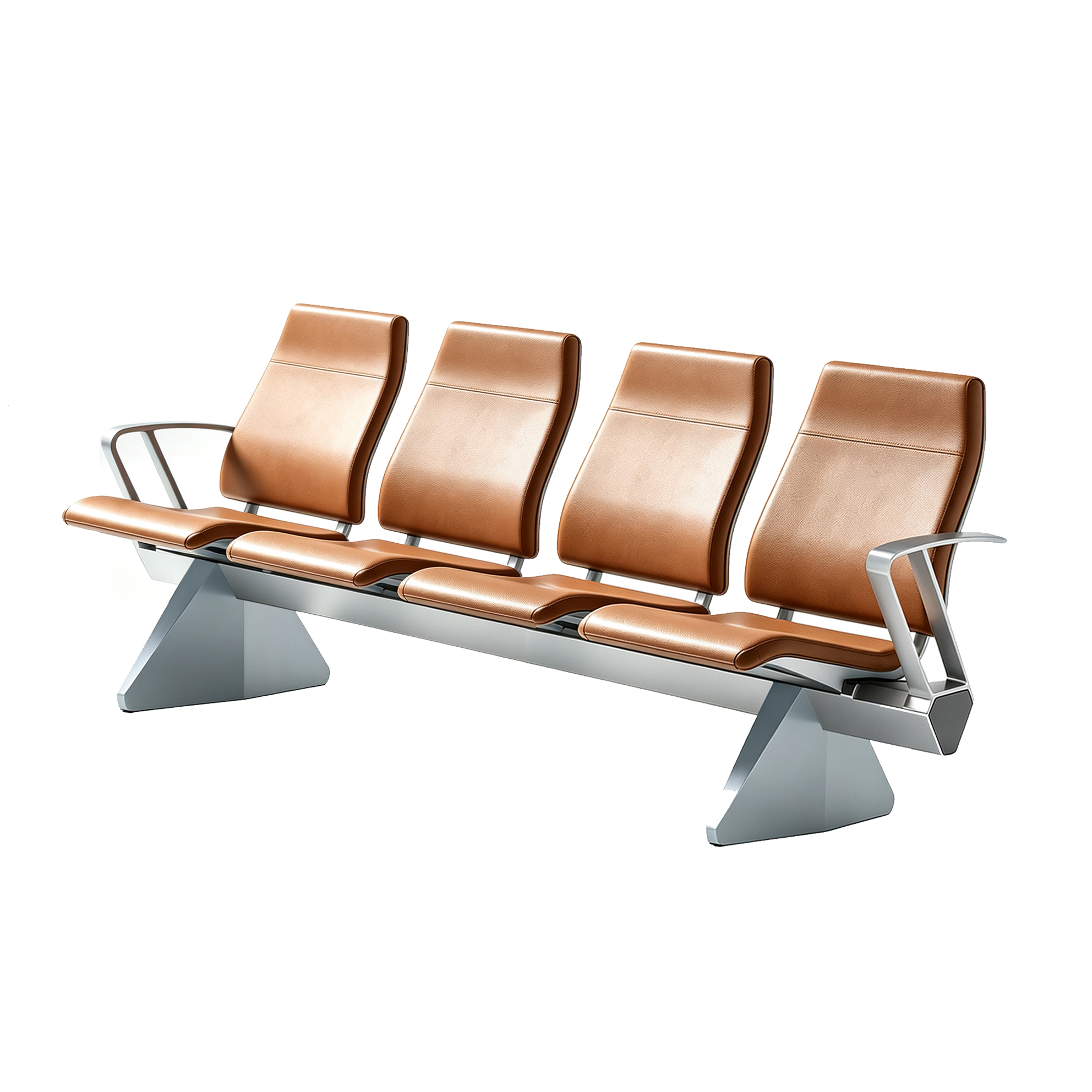 Specify finish, sample, and maintenance evidence
Finish requests should be precise enough for the supplier and buyer to compare them. State the required color system or sample reference where one exists, and separate the visible finish from the underlying material. If a color is still under development, label it as a selection direction and require a physical or otherwise approved sample before production release.
Ask whether the proposed finish is available on the exact model and whether different components use different finish processes. Confirm how the supplier labels samples, how changes are recorded, and who has authority to approve them. Keep approved samples and written comments with the drawing package. Do not write a generic “custom color” into the final schedule without an approval reference.
Maintenance information should be practical. Request cleaning recommendations, restrictions, replaceable-part references, and instructions for reporting damage. The airport operator should compare these instructions with its own cleaning products, frequency, and maintenance responsibilities. If the supplier has not provided a specific performance claim, do not create one in the specification.
Make quotations comparable before selecting a supplier
A quotation comparison should use one common basis. Include model, configuration, quantity, seat count, finishes, packaging, inspection, shipping term, unloading, installation, documentation, spare parts, exclusions, and approval milestones. A low unit price may not be comparable when one bidder prices individual seats and another prices complete beam assemblies.
Use this procurement sequence:
- Issue the same brief, drawings, and response template to each bidder.
- Record clarifications and assumptions in a question log.
- Review model-level drawings and material information.
- Approve the configuration and finish basis before production release.
- Confirm what inspection and documentation are included.
- Link delivery batches to zone readiness if the project is phased.
- Prepare receiving, snagging, and handover records.
Do not insert an unverified price, minimum order quantity, lead time, or delivery promise into the buyer’s own specification. Where the supplier’s public product page displays a commercial or technical detail, treat it as a point to confirm for the actual enquiry, not as a universal project commitment.
Build a handover file before the order is closed
The specification process should continue through receipt and handover. Before production, freeze the approved model, configuration, finish, revision, quantity, and responsibility matrix. Ask the supplier to identify deviations in writing. At receipt, compare package labels, quantities, visible condition, finishes, and missing components with the approved schedule.
During installation, record the zone, installed configuration, defects, corrective action, and responsible party. At handover, retain final drawings, care information, installation notes, spare-part references, approved finish records, and applicable inspection or test documents. The goal is not to create paperwork for its own sake; it is to leave the operator with information that matches what was actually supplied.
A focused enquiry to us should include the coordinated brief, model or category reference, approximate configuration, finish direction, destination, required documents, and project approval route. Contact us to request a model-specific proposal and clarify which information is available for the intended airport seating package.
Request your airport seating specification package
Ready to compare airport waiting seating options? Send us your coordinated project brief and ask for a model-specific response covering configuration, materials, finish samples, drawings, documentation, and delivery responsibilities. A clear enquiry gives your team a stronger basis for review and helps prevent avoidable changes after approval.
Before sending the enquiry, attach the latest plan or seating schedule, mark any provisional quantities, and name the person responsible for technical approval. Add the destination, preferred response format, finish direction, and the documents your contract requires. If the project is phased, identify the zones and approval sequence rather than asking for an unqualified delivery promise. Ask the supplier to return assumptions and exclusions in writing, so your team can compare the response with other bids. This simple package also gives the supplier enough context to recommend a configuration without presenting a generic catalogue answer as a project solution. After review, request a written quotation and controlled drawing set for the exact model and arrangement before any production release.