
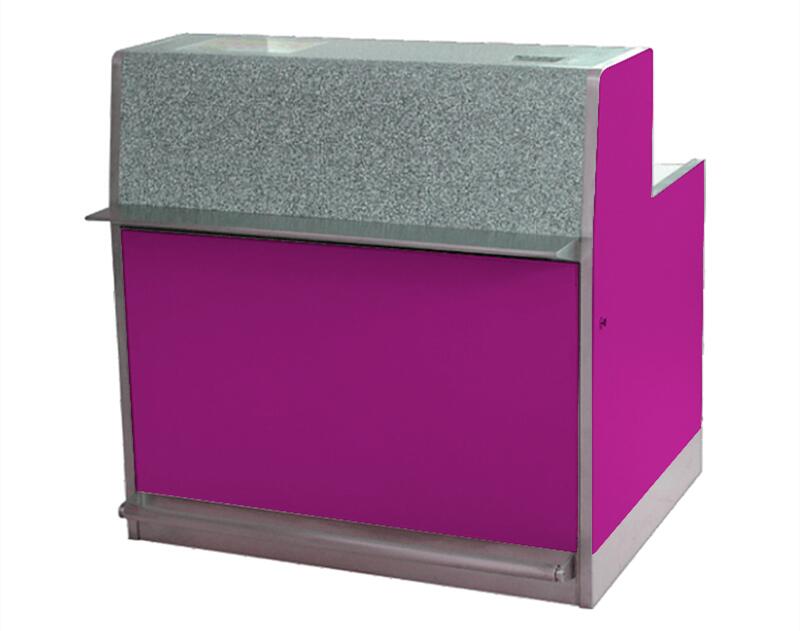
Choosing a check-in counter supplier is not simply a price comparison. Airport buyers need to compare the same layout, materials, equipment interfaces, documentation, packing scope, and handover responsibilities across every quotation. Start with a controlled information pack, ask each supplier to answer the same questions, and score only what is documented. MINGLE ML-AT13 airport check-in counter provides a verified product reference for this discussion: its product page lists airport application and fire-proof HPL, stainless steel, and Corina stone. The final project configuration still needs confirmation against the terminal drawings and equipment schedule.
Build One Comparable Brief Before Asking for Quotations
A fair comparison begins before the first quotation arrives. Prepare one brief that every shortlisted supplier receives at the same revision. Include the terminal or area, counter quantity by zone, preliminary plan, passenger approach, staff side, baggage relationship, preferred finishes, equipment list, delivery point, required submittals, and the known installation boundaries. If a detail is not confirmed, label it as provisional rather than allowing each supplier to make a different assumption.
The brief should identify what is being purchased. A counter package might include worktops, front fascias, side panels, service voids, access covers, cable-management provisions, end conditions, connecting pieces, or other project-specific elements. It might exclude IT equipment, baggage machinery, electrical works, signage, floor preparation, or installation. Do not assume that a standard product name defines the complete scope. Ask each supplier to separate standard product information from proposed alterations and project allowances.
Use a response template with the same headings for every bidder. Require a line for included items, excluded items, assumptions, alternatives, documents supplied, and information still required. This makes a lower figure easier to examine: the buyer can see whether the difference comes from a genuine design choice or from omitted work.
Compare Technical Fit, Not Only the Commercial Figure
When comparing an airport check-in counter supplier, review the technical response before ranking the price. Check whether the proposal relates to the actual counter positions and whether plan, elevation, section, and interface details are included. The drawings should show the work surface, visible panels, service access, cable routes, equipment openings, fixing approach, adjacent-module connections, and any dimensions that require project approval.
Create an interface table for screens, printers, scanners, telephones, payment devices, document trays, baggage equipment, power, data, lighting, and signage. The project team must confirm which items are actually needed; a list of typical equipment is not evidence that every counter includes it. For each interface, record the owner, required opening or support, drawing reference, approval status, and responsible reviewer.
Use the official ML-AT13 product reference as a starting point, not as an unqualified project specification. The page identifies the model, airport application, and listed material categories. Ask the supplier to confirm the selected combination, finish, dimensions, service access, and any adaptation in the project quotation. A supplier that clearly marks confirmed information and open questions is easier to coordinate than one that leaves the buyer to infer the scope.
Review Materials, Samples, and Maintainability
Material comparison should cover more than a colour name. Ask each supplier to identify the worktop, front fascia, side panels, trim, hardware, kick area, and service-facing surfaces. Record the finish code or sample reference, location, approval date, and drawing revision. MINGLE’s ML-AT13 page lists fire-proof HPL, stainless steel, and Corina stone; the buyer should still request confirmation of which material is proposed for each component rather than treating every listed material as included in one unit.
Keep appearance approval separate from technical approval. Interior reviewers may assess colour, texture, and coordination with adjacent millwork. Facilities and operations reviewers may need to examine cleaning access, panel removal, replacement strategy, and the effect of daily handling. The applicable safety, fire, accessibility, and building requirements must be confirmed by the project’s qualified consultants and local authorities; a supplier comparison should not turn an unverified claim into a compliance promise.
Maintainability belongs in the scorecard. Ask how an access panel opens, how adjacent modules separate, where service routes can be reached, and which component references will be provided. Request care information and a list of replaceable parts where available. These questions do not create a warranty, spare-parts stock, price, or delivery promise. They simply expose the information needed for a responsible purchase decision.
Check Packing, Delivery, and Installation Responsibilities
Two suppliers can quote similar counters while offering very different delivery scopes. Ask each bidder to state packaging, labelling, unloading, storage, protection, delivery point, and installation inclusions. Confirm whether units are shipped assembled, partially assembled, or as separate components, and ask for package dimensions and weights when they are required for route planning. Do not invent a delivery method or schedule if the project information is not yet confirmed.
The site team should compare the proposed route from unloading point to the counter zone. Review doors, lifts, temporary storage, floor protection, working hours, security access, and coordination with baggage, electrical, IT, AV, and flooring contractors. Identify which party measures the site, receives the goods, installs the furniture, connects equipment, removes protection, and records defects. A clear responsibility matrix can prevent a quotation from appearing complete while leaving critical site tasks unassigned.
Include a handover section in the comparison. Request approved drawings, finish references, care instructions, component references, inspection notes, and an open-defects list where applicable. Separate furniture checks from tests owned by IT, electrical, baggage, or other contractors. This keeps the buyer from treating a visually complete counter as proof that every connected terminal system has been tested.
Use a Weighted Supplier Comparison Sheet
A simple weighted sheet helps the project team avoid choosing by first impression. Set the criteria before opening the commercial totals. Useful headings include scope completeness, drawing quality, equipment coordination, material clarity, maintainability, packaging information, delivery assumptions, installation boundaries, handover documents, clarification response, and commercial transparency. Give each criterion a score only when the proposal provides evidence, and mark missing information as “to be confirmed” rather than awarding a favourable score.
Keep a clarification log beside the sheet. Record the question, date sent, supplier response, drawing or sample reference, and reviewer. Send the same clarification to every shortlisted supplier when it affects comparability. If a revision changes the counter quantity, finish, interface, or installation boundary, preserve the earlier assumption and record why it changed. This creates an audit trail for procurement and reduces disputes during approval.
Before selection, prepare a short recommendation that separates technical fit from commercial ranking. State which points are confirmed, which are alternatives, which are excluded, and which require approval. Then request a revised offer against the final controlled brief. If you need a starting point for the product discussion, review MINGLE’s airport check-in counter category alongside the ML-AT13 reference and send the layout, quantity, finish direction, interface schedule, and open questions.
Request a Like-for-Like Counter Proposal
A reliable check-in counter supplier comparison is built from one controlled brief and one evidence-based response format. Compare technical fit, materials, interfaces, maintainability, logistics, installation boundaries, handover documents, and commercial scope together. To begin a coordinated review, send MINGLE the latest plan, counter schedule, finish direction, equipment list, delivery information, and clarification log. Ask for a proposal that separates confirmed items, inclusions, exclusions, alternatives, and questions requiring approval before production.
Keep the final comparison with the approved drawings and quotation revision. That record should show why the selected scope was considered comparable, which assumptions were closed, and which items remain subject to project approval. It also gives the operator and main contractor a common reference for later shop-drawing review, delivery coordination, inspection, and handover. No supplier comparison can remove site-specific decisions, but a documented process makes those decisions visible before a counter enters production. Keep commercial assumptions separate from technical approvals so a revised price does not silently change the furniture scope or the responsibility for connected work.