
Airport trolley procurement for new terminals should begin with the approved layout and operating brief, not a catalogue image alone. Buyers need to match trolley types to arrival and departure routes, confirm how the equipment will be delivered and stored, and define acceptance checks before the first shipment leaves the supplier. A practical process links project drawings, product review, logistics planning, and handover records. MINGLE airport trolley lists BG Series, LG Series, and Shopper options; use those categories as a starting point, then request model-specific drawings and documents for the configuration under review.
Start with the terminal drawings and operating brief
New-terminal procurement teams should first mark every location where luggage trolleys will be collected, used, parked, returned, cleaned, and inspected. Add these points to the latest approved plan and distinguish arrival halls, baggage-claim approaches, departure check-in zones, parking bays, lift lobbies, and any external transition areas. The purpose is not to guess passenger volume. It is to create a traceable equipment schedule that a supplier can review against the real layout.
The drawing package should identify clearances, turning areas, floor transitions, doors, slopes, queuing interfaces, and nearby fixed furniture. Ask the design team to note where trolley movement must not obstruct emergency routes, accessible paths, staff circulation, or cleaning access. Then prepare a short operating brief: intended users, collection and return method, identification needs, cleaning responsibility, storage arrangement, and the people who will receive the shipment.
At this stage, keep the requirement open enough to compare suitable MINGLE categories, but record any non-negotiable project constraints. If a particular model, finish, accessory, or branding element is required, label it as an approval item rather than assuming it is included in every trolley configuration.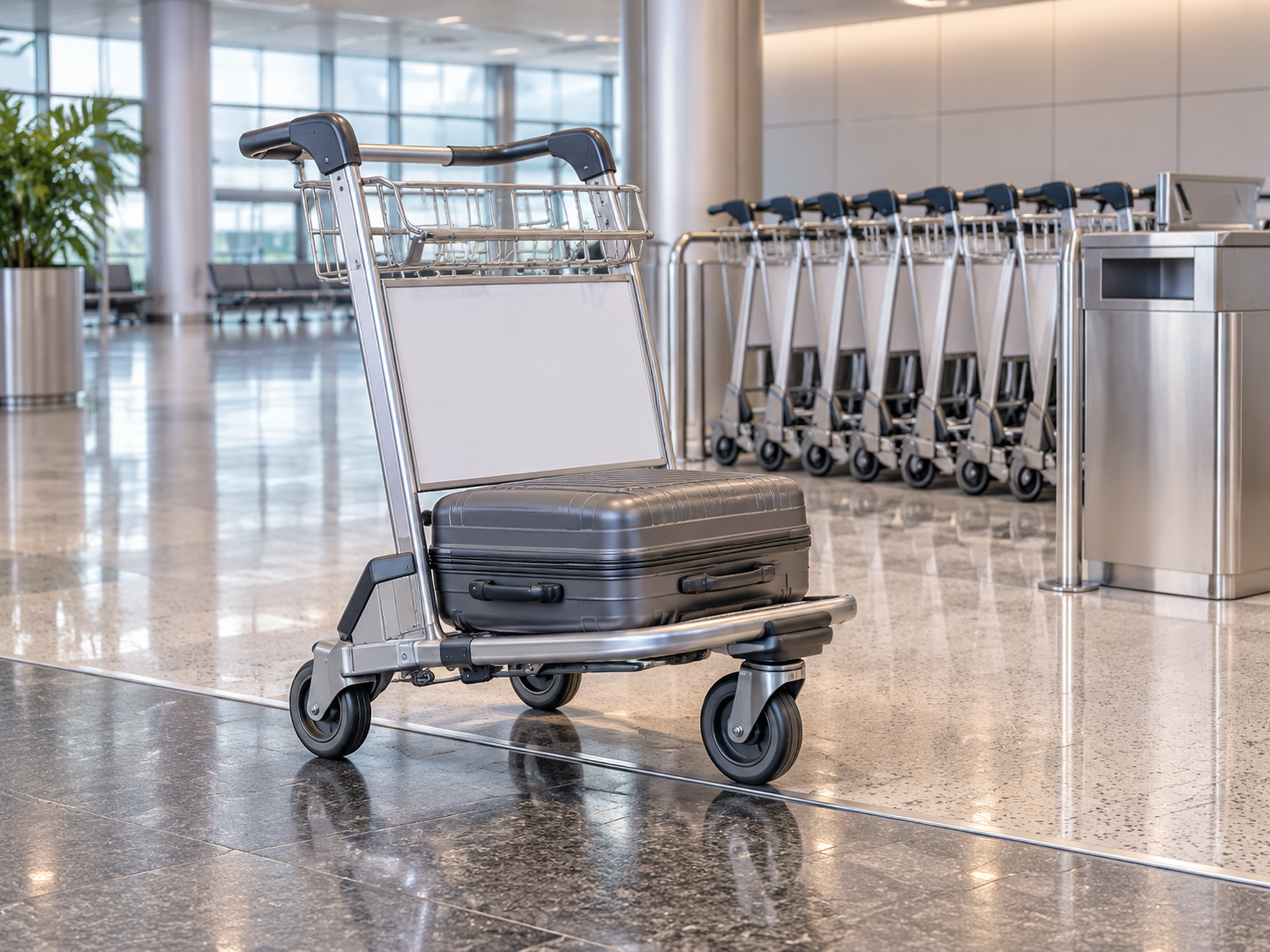
Compare trolley configurations against real use
A new terminal may need more than one trolley arrangement. A buyer could review standard luggage trolley options for passenger use, a shopper-style configuration for a different operating area, or another model family where the site brief requires it. MINGLE’s BG Series options and LG Series options provide named product families for that comparison. The correct choice should come from the approved application and supplier confirmation, not from a generic claim about every model.
Build a comparison sheet with one row per proposed model. Include model reference, intended zone, drawing revision, visible components, finish or colour request, identification or branding request, accessory scope, spare-part questions, and approval status. Ask for product drawings that show the relevant dimensions and interfaces. Do not place unconfirmed load limits, wheel specifications, brake details, materials, or certifications into the tender as facts. Mark each item “supplier to confirm” until the exact configuration is documented.
Review movement and parking as a system. Check how a trolley is picked up, turned, aligned with a parking point, and removed when maintenance is needed. Confirm that the planned storage method does not create a pinch point or reduce the usable route. If the terminal uses several trolley models, define visual identification carefully so operations staff can distinguish them without confusing a product label with a performance promise.
Coordinate delivery with the construction programme
Logistics planning should connect the trolley order to the terminal programme while avoiding an invented delivery promise. Give the supplier the required site, receiving contact, access restrictions, delivery address, planned receiving window, and the latest drawing revision. Ask the supplier to propose packaging, shipment documentation, carton identification, and the information needed for unloading. The procurement file should show which details are confirmed and which remain subject to the project schedule.
Before dispatch, request a packing list tied to model references and quantities approved by the buyer. If accessories, spare parts, identification plates, or documents are packed separately, they should be listed clearly. Agree how the receiving team will identify each package without opening every carton. Also check whether the site requires advance delivery notices, booking slots, lifting equipment, temporary storage, or protection from weather. These are project coordination questions, not assumptions about a supplier’s standard service.
Keep the approved product drawing, quotation scope, packing list, and purchase order together. When a revision changes a trolley model or finish, record who approved the change and update the inspection sheet before goods arrive. This simple document trail reduces the risk of accepting a visually similar item that does not match the scheduled configuration.
Use a practical acceptance checklist
Acceptance should cover quantity, identity, condition, documents, and agreed functional checks. Count the delivered packages against the packing list and photograph visible transport damage before moving items into storage. Match model references and requested identification details to the purchase record. Inspect accessible surfaces, handles, baskets, bumpers, wheels, fasteners, and brakes according to the supplier’s confirmed instructions. Do not create an unverified pass/fail measurement when the project documents do not define one.
Record each issue with package identification, model reference, location, description, photographs, and responsible action. Separate a cosmetic concern from a safety or operation concern, and define who can release a trolley for service. If a component is missing or damaged, quarantine the affected unit and ask for a written corrective response before deployment. Keep a signed receiving record even when the shipment appears complete.
The final handover file should include the approved drawings, model schedule, care and cleaning guidance, spare-parts information, warranty boundaries if offered, inspection records, and supplier contact route. Ask MINGLE to confirm which documents apply to the exact approved configuration. A category page can support early comparison, but the model-specific approval package should control the final handover.
Send us the relevant terminal drawing revision, operating zones, proposed quantity by location, finish or identification requirements, delivery constraints, and acceptance-document questions.