
For airport luggage trolley maintenance, procurement teams should specify replacement parts, cleaning methods, inspection records, and supplier handover documents before issuing an order. Ask which wheel, brake, fastener, bumper, basket, and identification components can be replaced, then match the cleaning routine to the trolley’s frame and finish.
MINGLE Airport Luggage Trolley range is organised into BG Series, LG Series, and Shopper categories, so buyers should compare the intended operating area and service plan with the selected configuration rather than assume every trolley uses identical parts. This approach makes the purchase easier to operate, budget, and hand over.
Turn maintenance requirements into a procurement scope
Maintenance is not only a facilities issue after delivery; it is a specification issue at the quotation stage. Start with a simple asset-maintenance brief covering the trolley’s location, expected handling environment, parking arrangements, cleaning resources, and the people responsible for daily checks. Do not invent a service interval or load limit when the supplier has not confirmed one. Instead, ask us to state the applicable maintenance guidance for the exact model under consideration.
Record the exact model name, approved finish, accessories, and any requested identification feature in the purchase file.
 Ask for a spare-parts and wear-parts schedule
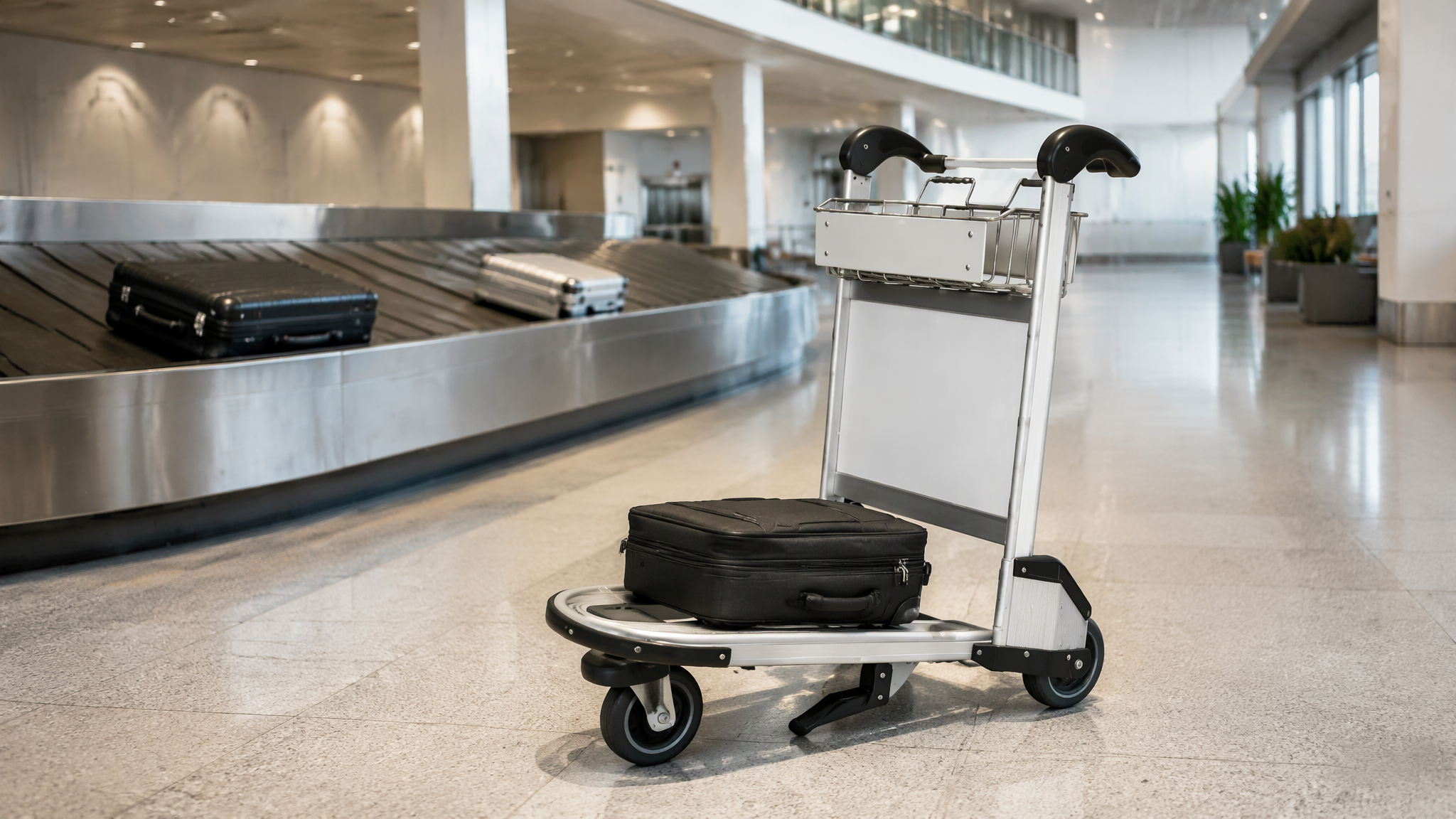 Ask for a spare-parts and wear-parts schedule
A credible airport luggage trolley maintenance plan begins with a written spare-parts schedule. Ask the supplier to identify wheel or castor assemblies, brake components, fasteners, bumpers, baskets, handles, and identification plates.
Request a model-specific parts list
Ask for an exploded view or parts list where available, with a clear part name, reference, material or finish description, and compatibility statement. Include an initial service kit as a separately identified line in the request for quotation.
Define cleaning requirements without damaging finishes
Ask which detergents, cloths, brushes, water pressure, and drying methods are acceptable. After cleaning, check wheels, brake, handle, basket, bumper edges, and fasteners, and record defects and release status.
Build acceptance and handover around maintainability
Verify the delivered model, accessories, finishes, identification marks, movement, and brake response according to supplier instructions. Keep the official parts list with a one-page checklist and identify who may return a trolley to service.
MINGLE airport trolley product information discusses periodic inspection, cleaning, brake checks, wheel-fastener checks, and replaceable modular parts. Use it as background and obtain model-specific instructions.
Airport luggage trolley maintenance FAQ
Which maintenance questions belong in the RFQ?
Ask about compatible spare parts, replacement procedures, tools, cleaning agents, inspection guidance, identification, training, and handover documents.
Should buyers order spare parts with the first trolley shipment?
Ask the supplier to quote a separately identified initial service kit and explain the recommended contents.
How should cleaning instructions be approved?
Have the supplier confirm suitable methods for every relevant surface and component, then convert the method into a local checklist.
What is a clear next step for procurement teams?
Send us the intended model or category, operating areas, finish and identification needs, cleaning resources, required documents, and spare-parts questions.
Request current model-specific drawings and care instructions because the final approved configuration controls the maintenance plan.
📧 Email: sales02@gdmingle.com
📞 WhatsApp:+86 133 9224 9161