
When a terminal team compares airport luggage trolley configurations, it should start with the passenger route and operating brief rather than a catalogue image. Record where carts will be collected, what luggage they must carry, how passengers will move them through doors and lifts, where empty units will be nested, and how staff will inspect them. Then compare each proposed trolley by handle, basket or platform, wheel set, brake, bumper protection, nesting method, and documented options. This makes a quotation review traceable and helps the buyer separate confirmed product facts from assumptions that still need supplier approval.
MINGLE’s airport trolley category groups products into BG Series, LG Series, and Shopper options. The official CY-X4150-BW2 trolley page lists a self-adjusting automatic brake with pole, ergonomic flat handle, front-bumper protection, stainless steel basket, natural rubber anti-noise wheels, a trolley engagement system, and nesting to save space. Those details are specific to the listed model and should not be transferred to another configuration without checking its own current documentation.

Start With the Terminal Operating Requirement
A trolley configuration is suitable only when it fits the route, handling method, and storage plan. Before comparing suppliers, mark the collection point, baggage-claim exit, doors, lifts, escalators, kerbs, public transport connection, and trolley return area. Note any narrow turns, floor transitions, security boundaries, or locations where nested carts may obstruct passengers.
Use the same short brief for every supplier. It should state the intended zone, whether the carts are for passenger use or staff handling, the expected luggage arrangement, the available storage footprint, and the documents required for approval. Avoid inventing passenger volumes or a fleet number if the operating team has not supplied those figures. Instead, ask bidders to explain how their proposed configuration should be reviewed against the actual plan.
A practical requirement sheet can include:
- Collection, use, return, and storage zones.
- Required clearances at doors, lifts, corners, and floor transitions.
- Luggage types or loading pattern that the basket or platform must accommodate.
- Preferred handle arrangement and passenger contact points.
- Brake, bumper, wheel, nesting, and staff-handling questions.
- Finish, cleaning, inspection, spare-parts, and handover-document needs.
This first step prevents the team from selecting a trolley only because its general appearance seems familiar.
Compare the Main Trolley Components
Handle, basket, and passenger contact points
Review the handle shape, grip area, clearance, and relationship to the luggage support. The official CY-X4150-BW2 page describes an ergonomic flat handle and a stainless steel basket. For another model, confirm whether the same description applies or whether the component is different. Ask for a current drawing or option sheet that identifies the approved configuration, rather than relying on a photograph taken from a different angle.
Check whether bags, coats, or other personal items have a stable place to sit without interfering with the handle or the passenger’s path. If a product page lists hooks or a cup holder, record those as model-specific features and confirm whether they are part of the selected supply scope. Do not describe an accessory as standard until the quotation or technical submission confirms it.
Wheels, brake, and protection
Wheel behavior affects turning, noise, floor contact, and staff movement. Ask the supplier to identify the wheel material, swivel arrangement, replacement reference, and any stated anti-noise feature. MINGLE’s CY-X4150-BW2 page lists natural rubber anti-noise wheels; that fact should remain tied to that product page.
Where a self-adjusting automatic brake with pole is offered, ask how it operates, what the staff inspection point is, and how the feature is demonstrated during handover. If the product includes front-bumper protection, mark its location on the drawing and clarify what the stated protection function covers. These questions are more useful than an unsupported claim that every trolley is suitable for heavy traffic.
Nesting and staff handling
Record the nested length, separation method, and collection process for the approved model. MINGLE’s product page describes nested trolleys intended to save space and an engagement system for transporting more than 40 trolleys by airport scooter. Treat those as page-specific product statements. Confirm the applicable equipment, operating boundary, and instructions with the supplier before including them in a staff procedure.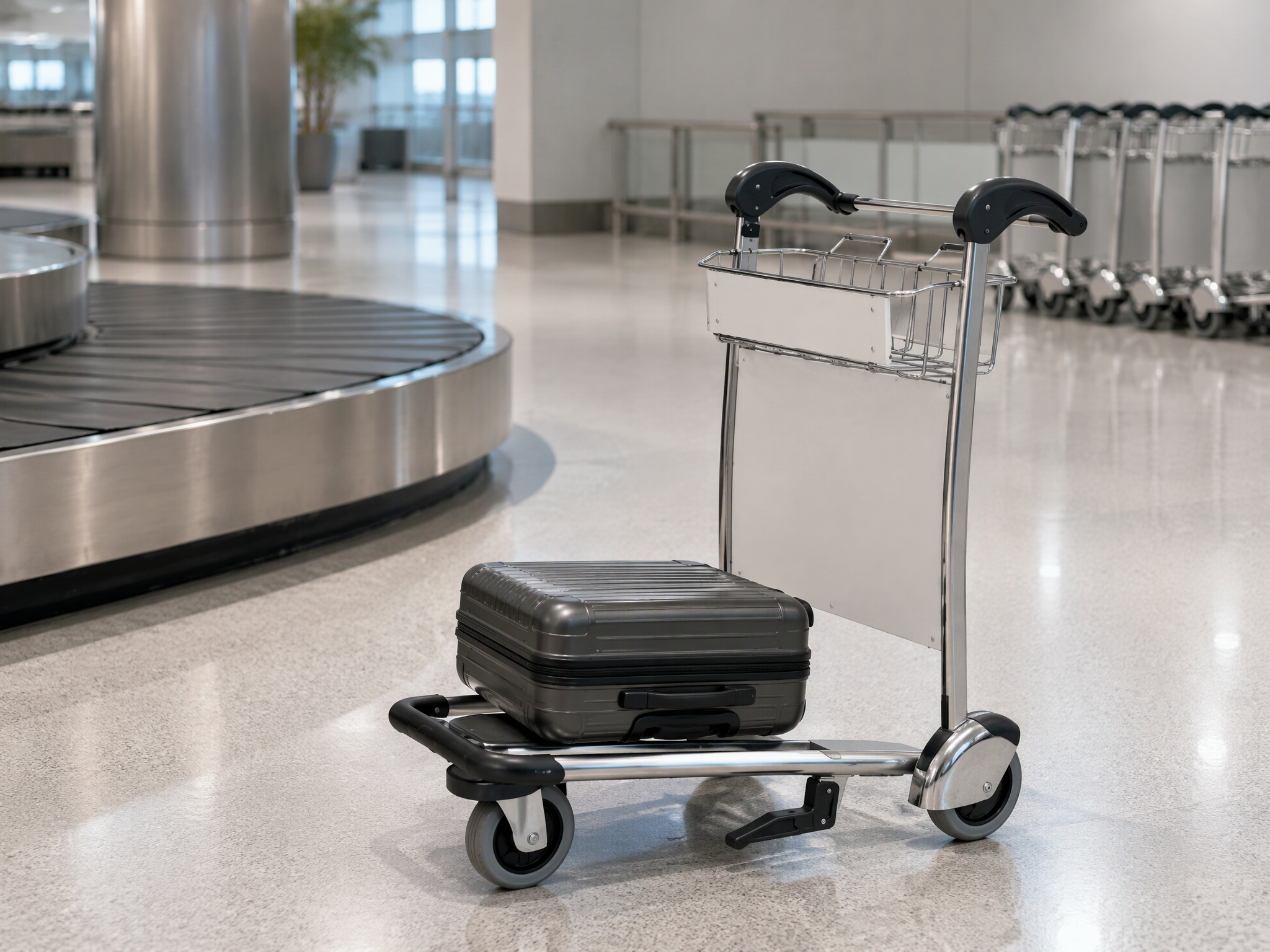
Build a Comparable Supplier Review
Put each quotation beside its technical submission and compare like with like. The review sheet should identify the model code, drawing revision, materials stated by the supplier, options, finish reference, dimensions, images, packing scope, delivery scope, inspection documents, spare-parts information, and unresolved questions. Add an evidence column that says whether each statement comes from the official product page, a drawing, a supplier response, or the project brief.
Flag any price that does not identify its configuration. A low figure is not comparable if the basket, brake, bumper, wheels, finish, packing, or documents are excluded. Similarly, do not turn a product-page load statement into a fleet-wide promise. The CY-X4150-BW2 page states a high-strength aluminum-alloy construction and a listed capacity of up to 150 kilograms for that model. Keep that claim associated with the exact model and request confirmation before using it in a project specification.
Before approval, ask for the current product drawing, option list, finish reference, care guidance, inspection points, replacement-part identifiers, packing information, and written answers to route-coordination questions. This creates a handover record without guessing certification, price, minimum order quantity, delivery time, or performance at a particular airport.
Request a Configuration Review From MINGLE
Send MINGLE the terminal plan, collection and return points, clearances, intended luggage arrangement, storage approach, preferred trolley series or model, finish requirements, and questions that remain open. Begin with the MINGLE airport trolley category and ask for current drawings and configuration details for the shortlisted option. A structured brief lets your team compare airport luggage trolley configurations on evidence, coordinate the route and storage interfaces, and approve only the features that are documented for the selected model.
Before you submit the inquiry, list the configuration decisions that need a written response: handle and basket arrangement, wheel and brake details, bumper protection, nesting method, finish, replacement parts, packing, and the documents required at handover. Ask the supplier to identify which statements are standard for the model and which depend on selected options. This final check gives the procurement team a clear record of what was requested, what was confirmed, and what must remain open for design coordination. It also keeps the request focused on the actual terminal route instead of unsupported claims about a generic trolley.