
For a new airport, terminal extension, or passenger-processing renovation in the Middle East, the check-in counter airport teams choose must support more than a polished interior. It must fit the terminal plan, coordinate with passenger and baggage procedures, provide a practical working surface for airline staff, and meet the project’s finish and documentation requirements. This guide shows how to plan the package and evaluate a supplier before ordering.
MINGLE airport check-in counter is designed for airport applications and is listed with fire-proof HPL, stainless steel, and Corian stone. It gives project teams a specific reference when comparing finishes, construction, and customization. It does not replace coordinated terminal design, but it can turn a general furniture brief into a clearer procurement discussion.
Plan the Check-In Counter Around Passenger Processing
An airport check in counter is part of a larger passenger journey. Before choosing a model, map the sequence from terminal entry to check-in, baggage drop, security, circulation, and the departure side. The Transportation Research Board describes terminal planning around transferring passengers and baggage between aircraft and ground transportation; this is a reminder that counters belong to the terminal system, not isolated desks.
Start with the actual zone where the counters will operate. Identify the number of airline positions, queue direction, staff access, baggage equipment, signage, power and data points, and the relationship with nearby circulation routes. In a Middle East airport project, the design team may also need to review strong daylight, dust-control procedures, cleaning routines, and the operational requirements of a high-volume terminal. These factors should be included in the room or area schedule before the furniture quotation is requested.
Create a counter schedule that records each position, module length, worktop arrangement, finish, cable requirements, and any passenger-facing accessories. Show the queue line and the staff circulation zone on the same drawing. This helps the airport operator, architect, contractor, and supplier review one coordinated reference instead of working from separate sketches.
Choosing an Airport Check-In Counter Finish and Construction
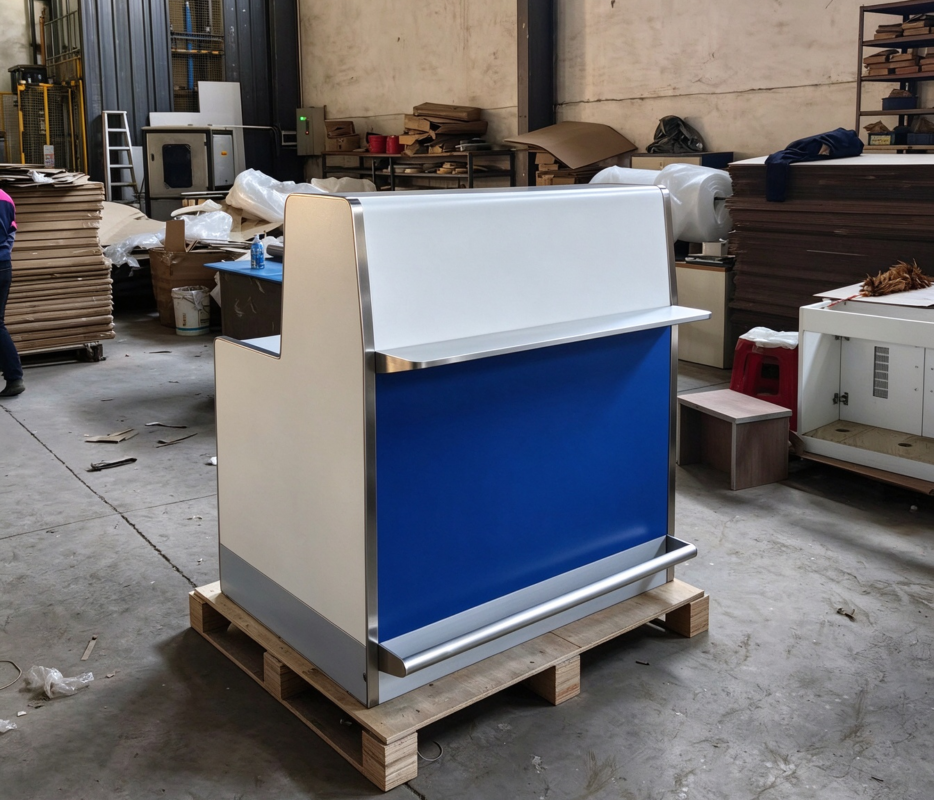
The right finish for an airport check-in counter airport project must balance appearance with daily use. Counter surfaces are touched continuously, cleaned regularly, and viewed by passengers at close range. Ask the supplier to identify the proposed materials for the worktop, front panel, side panels, support structure, edge treatment, and service openings. Confirm whether the sample represents the production finish and whether color variation is acceptable for the project.
ML-AT13 is listed with fire-proof HPL, stainless steel, and Corian stone. These material categories can support different design goals: HPL may help the team coordinate a branded decorative surface, stainless steel can contribute a precise commercial appearance, and Corian stone may support a more continuous solid-surface look. The final specification should state the exact combination selected, rather than assuming every displayed option is included in one standard unit.
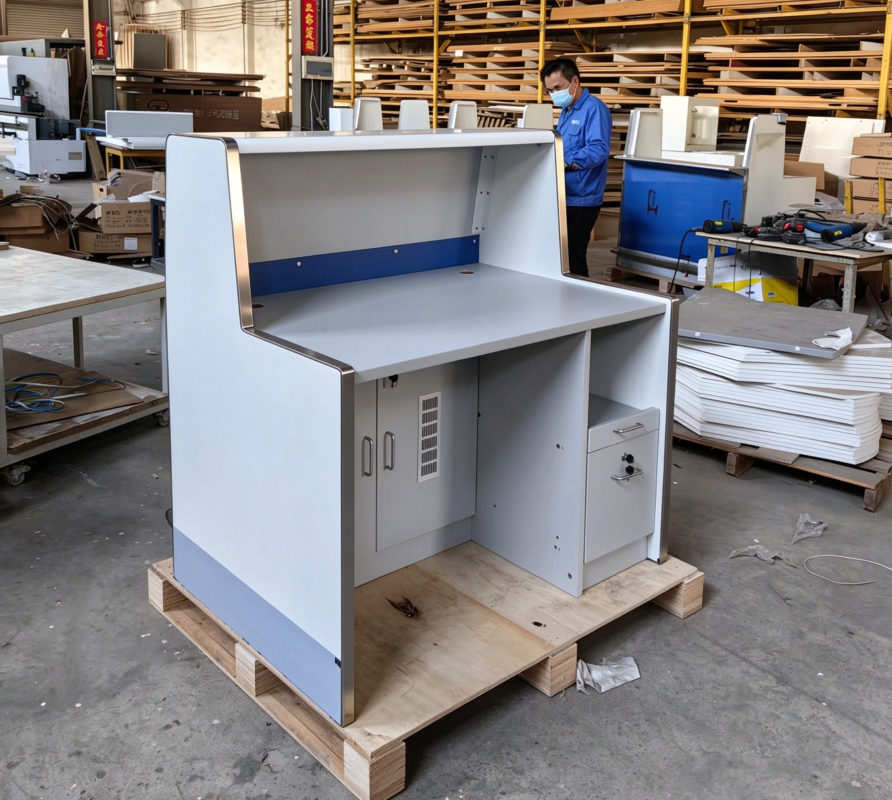
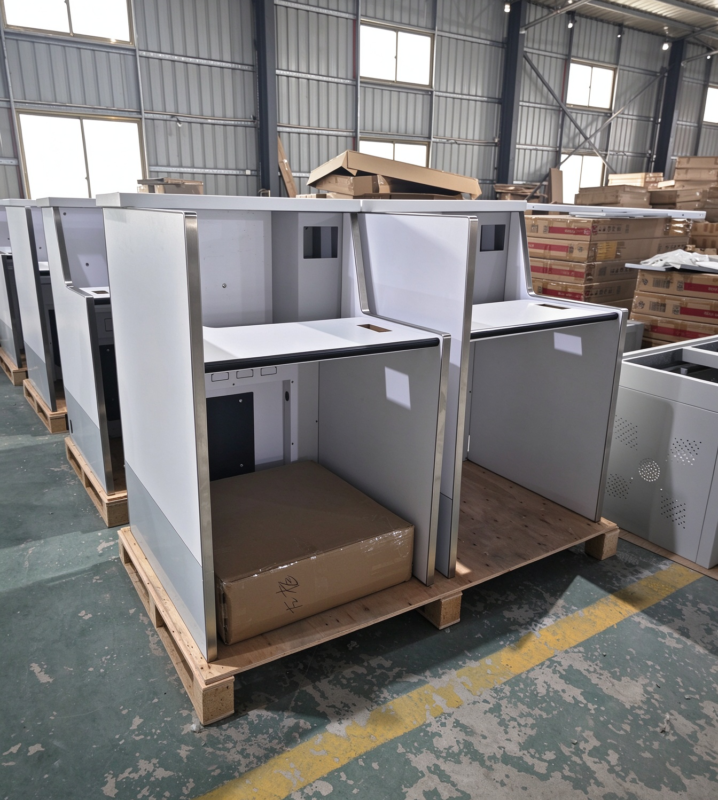
Review construction details that affect installation and maintenance. Request dimensioned drawings, fixing points, panel access, service voids, cable-routing paths, and the method for connecting adjacent modules. Confirm how the counter is packed and whether it arrives assembled, partially assembled, or as separate components. The most attractive counter can still create project delays if it cannot be moved through the terminal route or coordinated with the floor and wall works.
Use standards references carefully: ask for the applicable report and its scope for the exact counter or component under consideration. A general reference to a standard should not be treated as proof that a specific airport check-in counter has passed every possible test.
How to Evaluate an Airport Check-In Counter Supplier
When comparing an airport check in counter supplier, send every shortlisted company the same project information. Include the terminal location, number of counters, preliminary layout, preferred materials, target finish, delivery point, installation date, and required submittals. Ask each supplier to list inclusions, exclusions, assumptions, and proposed alternatives in the quotation. This makes a low initial price easier to compare with a complete supply-and-installation package.
Evaluate the supplier’s technical response as well as the price. Can the team provide drawings and finish samples? Does it explain connections to power, data, baggage systems, and adjacent millwork? Does it identify packaging dimensions, site-delivery requirements, and replacement parts? Clear answers reduce uncertainty during construction.
Separate the approval milestones into sample approval, shop-drawing approval, production, inspection, shipment, installation, and handover. Ask for a schedule based on the actual quantity and selected finish instead of accepting a generic lead-time statement. For projects outside the supplier’s home market, also clarify export packing, shipping terms, customs responsibilities, unloading, storage, and site access.
Before production, approve one documented reference set. It should include the final dimensions, material combination, finish codes, hardware, service openings, quantities, and any approved deviations. Keep this reference with the contractor and project manager so delivered units can be checked against the same information.
ML-AT13 Airport Check-In Counter Project Checklist
Use the following checklist before requesting a final quotation for an airport check-in counter project:
- Confirm the number of airline or service positions by terminal zone.
- Mark queue lines, passenger access, staff circulation, baggage interfaces, and wheelchair access on the plan.
- Define the exact ML-AT13 material and finish combination required for the project.
- Request dimensioned drawings, finish samples, installation guidance, and packing information.
- Confirm power, data, cable management, lighting, signage, and equipment interfaces with the relevant contractors.
- Ask for delivery terms, lead time, inspection steps, spare components, and handover documents.
- Verify any safety, fire, accessibility, and local building requirements with the project’s qualified consultants.
What should buyers send to an airport check-in counter supplier?
Send the layout, counter schedule, quantities, finish expectations, destination, required documents, and installation target. A clear brief allows the supplier to prepare a more comparable proposal.
If you are developing a terminal in the Middle East and need a check in counter airport solution, send MINGLE your layout, counter quantity, preferred finish, and project schedule. The team can help review the ML-AT13 requirements and prepare a quotation for your airport check-in counter project.
💻 https://gdmingle.com/product-category/airport-counter/
📧 sales02@gdmingle.com